By Jon Brown, Christian Post Reporter
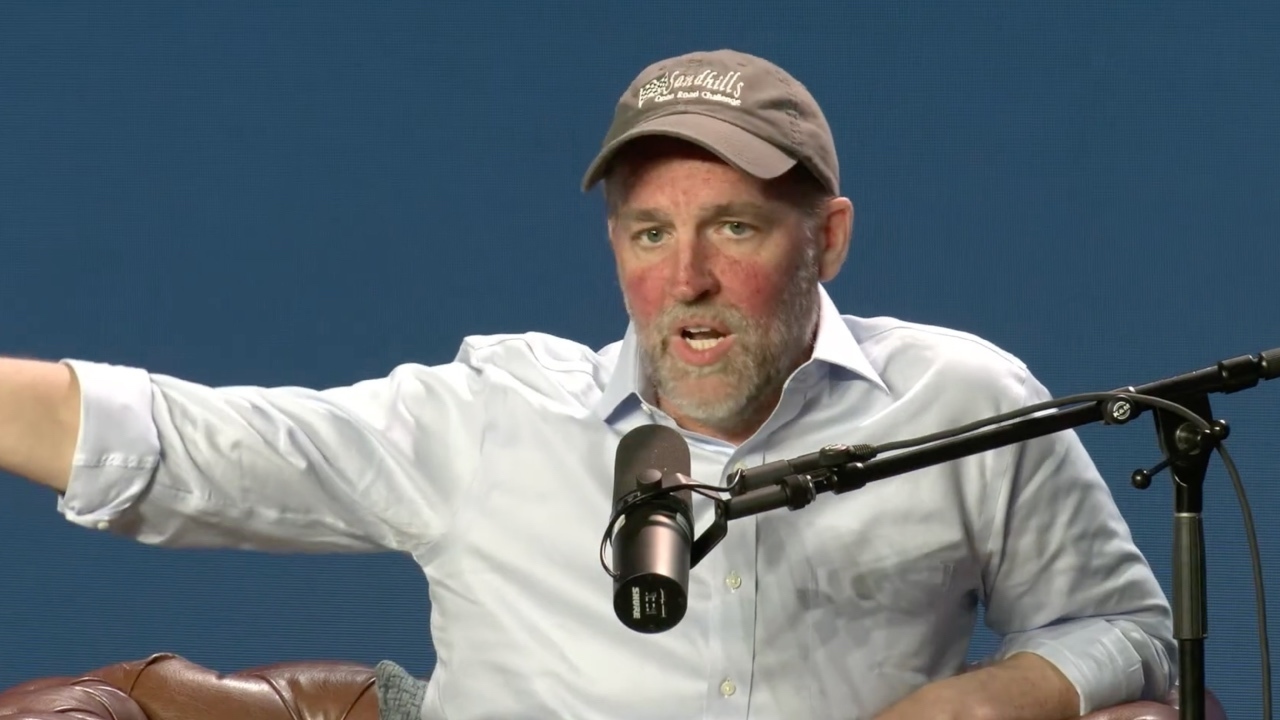
Former Sen. Ben Sasse, R-Neb., suggested during a recent podcast that Catholic integralism and some forms of Christian nationalism are politically impractical and built on a faulty eschatology.
Speaking during a podcast with Reformed theologian Michael Horton that aired Wednesday, Sasse praised the genius of the American constitutional system before Horton asked him to weigh in on Catholic integralism and Christian nationalism. He asked whether those who seek to reduce the separation between church and state are confusing “the penultimate with the ultimate, the secular with the sacred, [and] looking for the shining city on a hill here and now in the state.”
“You say, ‘Should they be taken seriously?’ I mean, ultimately, I think no. But I want to be humble about how and why we get there,” Sasse said.
Sasse, who is also Reformed in his theology and has been a longtime friend of Horton, noted that Christians can be reasonably skeptical of Enlightenment assumptions, but warned against utopian ideas that confuse the Kingdom of Heaven with temporal political systems.
Should Christian Nationalism and Catholic Integralism be taken seriously? @BenSasse answers.
“‘Should they be taken seriously?’ I mean, ultimately I think no — but I want to be humble about how and why we get there.”
“Can people who are skeptical of a lot of Enlightenment… pic.twitter.com/Cc1vDCpRx7
— Sola Media (@solamediaorg) July 15, 2026
“I’m pretty sympathetic to a lot of what the Enlightenment offered us in response to many of the things that had just come before, but that doesn’t mean that the Enlightenment is at all a foretaste of Heaven,” Sasse explained.
“So, I do think there is a temptation right now to have an over-realized eschatology, where people want to find a city that has foundations right now, dang it. ‘I’m ready to build it, and I want it to be better, and I want it now, and I want to smash the people who are in the way of it,’ is tonally the way a lot of these folks talk.”
Sasse, who represented Nebraska in the U.S. Senate from 2015 to 2023, said such an attitude is politically unrealistic, and that enacting some of the fringe policies proposed by some of its adherents is mathematically impossible. He suggested there is overlap between the aims of Protestant Christian nationalism and Catholic integralism, which seeks to integrate religious authority and political power.
“Philosophically having a debate is one thing, and claiming that they’re doing practical politics is quite another. So, I think it is important, without us trying to answer a lot of these questions, to at least acknowledge there are Catholic claims about integralism that a lot of Protestants seem to pine for and lust after without working through what would that really mean,” he said.
Noting the ability to make a simple majority angry about something is “very different” than genuine political revolution, Sasse pinpointed Christian nationalist debates about abolishing women’s suffrage as an example of unrealistic proposals that he described as “a weirdo online phenomenon.”
“There is no chance on Earth that any of these folks who are advancing some sub-varieties of Christian nationalism are actually thinking there’s math by which they’re going to end women’s suffrage,” he said. “And yet, they talk like it, because online it seems really provocative to say things like that. And I don’t really know what it’s worth to linger on some of these silly online debates.”
Sasse, who announced his terminal diagnosis of Stage 4 pancreatic cancer last December, later warned that “the category error of trying to use natural ends to supernatural means is a way of denying our finitude and our mortality, and the fact that we live — Augustinian — in the already, but not yet.”
Sasse, whose farewell address in 2023 expressed deep frustration regarding the Senate’s inability to accomplish anything substantial, has emphasized the importance of Christians remembering that they are ultimately citizens of a heavenly kingdom.
During an address to seminarians at Westminster Theological Seminary of California in 2016, he urged them to prioritize their citizenship in the Kingdom of God.
“Christians should realize that we have always been living in exile,” and this earthly kingdom is not our true home, Sasse said at the time. Since his diagnosis last year, he has repeatedly explained in interviews the eternal hope he finds in the Gospel, despite the pain of having to leave his family behind.
Jon Brown is a reporter for The Christian Post. Send news tips to jon.brown@christianpost.com