
By Joseph Mattera, Op-ed Contributor
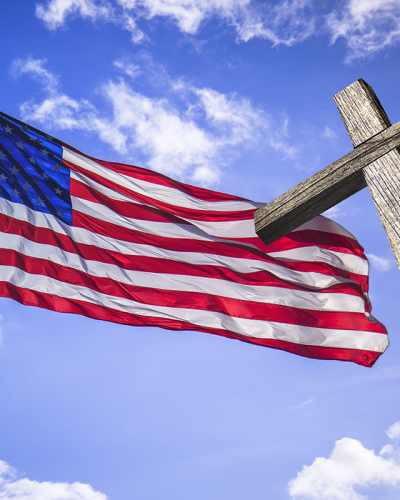
Few phrases are quoted more often — and understood less accurately — than “separation of church and state.” In contemporary discourse, it has become a rhetorical weapon used to silence Christian voices in public life, as if biblical conviction automatically disqualifies a citizen from shaping law, culture, or policy.
As a student of history, I affirm the proper distinction between ecclesiastical authority and civil authority. The Church is not called to run the state, and the state must not control the Church. But to move from institutional distinction to the exclusion of God from public life is not constitutional fidelity — it is ideological revisionism.
Like Abraham Kuyper, the Dutch theologian and prime minister, I believe in distinct spheres of authority under God. Family, church, state, education, and commerce each possess their own God-given responsibilities. But none of these spheres is autonomous from the creator. We may affirm the separation of church and state; we cannot affirm the separation of God and state.
To demand that public policy operate as if God does not exist is not neutrality — it is secularism masquerading as objectivity.
The biblical pattern: Prophets, priests, and kings
From the earliest chapters of Scripture, civil authority is never portrayed as morally independent. Israel’s kings were commanded to meditate on the Law of God daily (Deuteronomy 17:18–20). Their legitimacy depended not merely on political success but on covenant fidelity.
When kings deviated from God’s ways, prophets confronted them — often at great personal risk. Nathan rebuked David for his abuse of power. Elijah confronted Ahab and Jezebel for institutionalized injustice. Isaiah challenged rulers who enacted oppressive laws. This was not “mixing religion and politics”; it was moral accountability.
The prophets did not seek to seize the throne. They sought to remind the throne that it was not ultimate.
When rulers listened, the nation experienced renewal. When they resisted, the society deteriorated. Scripture consistently portrays public righteousness as a blessing and systemic injustice as a judgment.
John the Baptist and Herod: A New Testament example
Some argue that this prophetic model ended with the Old Testament. The New Testament, however, presents the same pattern.
John the Baptist publicly rebuked Herod Antipas for his unlawful marriage, a political ruler’s private sin with public consequences. His courage cost him his freedom and ultimately his life. Yet Jesus affirmed John as the greatest prophet born of women.
John did not run for office or lead a revolt. He spoke truth to power — a profoundly public act.
Likewise, the apostle Paul reasoned with governors Felix and Festus and testified before King Agrippa regarding righteousness, temperance and judgment. (Acts 24:25)The gospel was never confined to private spirituality; it addressed the moral responsibilities of rulers.
The early Church: Transforming society from the margins
The early Church lived under an empire with no democratic mechanisms. Christians could not vote, lobby, or draft legislation. Yet they did not retreat into isolated piety. Through sacrificial love and moral clarity, they reshaped social norms.
Christians rescued abandoned infants left to die by exposure — a common practice in the Roman world. They cared for widows, the poor, and the sick, often at risk to themselves during plagues. Their communities included slaves and free persons worshiping as equals before God, a revolutionary social reality.
The Didache, one of the earliest Christian documents outside the New Testament, explicitly condemned abortion and infanticide. This was not a private opinion; it was a countercultural moral stance in a society that accepted both practices.
Over time, Christian influence contributed to the eventual decline of gladiatorial games and laid groundwork for later abolitionist movements. The Church opposed inhuman policies long before it possessed political power.
Within three centuries, this marginalized movement transformed the moral imagination of the empire.
Freedom of slaves and human dignity
While the New Testament did not launch a violent revolt against slavery, it planted seeds that would ultimately undermine the institution. By declaring that in Christ there is neither slave nor free, it introduced a radical equality that contradicted the hierarchical assumptions of the ancient world.
Early Christian leaders encouraged humane treatment of slaves and eventually eradicated slavery from the Roman Empire. The trajectory of Scripture moved history toward liberation, not domination.
What the Constitution actually protects
The American founders, many of whom were deeply influenced by biblical thought, sought to prevent the establishment of a national church and to protect religious liberty for all citizens. They did not intend to ban religious reasoning from public debate.
The First Amendment restrains Congress from establishing a religion or prohibiting its free exercise. Hence, it was designed more to keep the state out of controlling the church than to keep people of faith out of influencing the state.c
In fact, many foundational American documents explicitly reference God as the source of rights and moral order. Remove that foundation, and rights become subject to shifting political winds.
Consequently, every law reflects moral assumptions about right and wrong, human dignity, and the common good. Laws against theft presuppose property rights. Laws protecting life presuppose that human beings possess inherent worth.
If Christian moral reasoning is excluded, other philosophies will fill the void — often grounded in materialism, relativism, or utilitarianism. These are not neutral positions; they are competing worldviews.
Neutrality is impossible. The public square is always governed by someone’s vision of justice.
A prophetic call for our time
The Church’s role is not to corporately seize political power but to bear faithful witness in every sphere of society. We speak not as partisan operatives but as ambassadors of a higher kingdom.
We advocate for laws that protect the vulnerable, honor human dignity, preserve freedom of conscience, and restrain evil. We do so not to impose faith by force but to serve the common good.
Separation properly understood
A healthy society requires both institutional distinction and moral coherence. The church must be free from state control. The state must not coerce religious belief. But neither can public life function as if God is irrelevant.
Separation of church and state protects freedom of religion; it does not mandate freedom from religion.
To insist that Christian citizens suppress their convictions when participating in civic life is to deny them full participation in democracy.
We do not seek a theocracy. We seek justice. We do not demand privilege. We demand the freedom to live and speak as faithful citizens of both heaven and earth.
There is no separation of God from the world He created.
There is no neutrality before the one who reigns over all nations.
And there is no faithful Christianity that confines the lordship of Jesus to private devotion while surrendering the public square to lesser gods.
Dr. Joseph Mattera is renowned for addressing current events through the lens of Scripture by applying biblical truths and offering cogent defenses to today’s postmodern culture. To order his bestselling books or to join the many thousands who subscribe to his acclaimed newsletter, go to www.josephmattera.org.