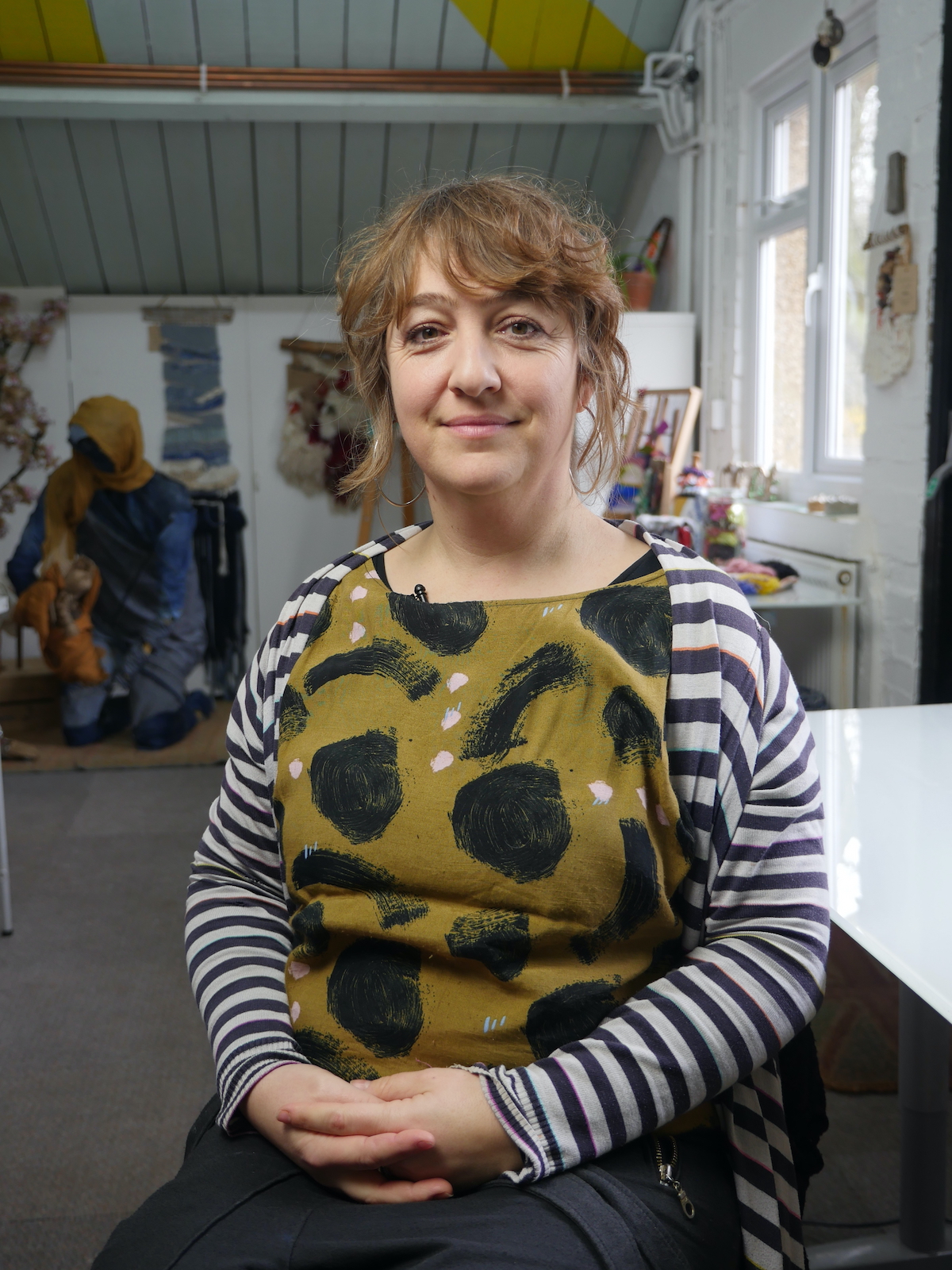
A Christian artist who was removed from her own exhibition after expressing opposition to childhood gender transition has reached a legal settlement with Watford Borough Council, ending a three-year dispute.
Victoria Culf, 46, brought legal action against the council after being barred from her independently-funded exhibition at Watford Museum in June 2023.
The case concluded with an undisclosed settlement and a public commitment from the council to work with Culf again.
The dispute stemmed from a private conversation between Culf and a council employee who mentioned that their child was “socially transitioning” and that the family had sought access to puberty blockers. Culf responded that she believed transitioning was harmful to children, citing her Christian beliefs and her experience working with young people.
The Christian Legal Centre, which is supporting her, said that following the exchange, Culf was accused of engaging in a “transphobic rant”, and the council subsequently banned Culf from her exhibition and informed her she was under police investigation for a hate crime, which police records later obtained during the legal proceedings showed not to be the case.
In her 2024 lawsuit, Culf cited breach of contract, discrimination, harassment, defamation and other claims, arguing the council’s actions amounted to unlawful interference with her religious beliefs.
In a statement issued as part of the settlement, the council acknowledged that gender transition “is a complex and sensitive subject” and that “it respects that people hold a range of deeply held views about it”.
The council said it was committed to freedom of expression and learning from the dispute, and that it “looks forward to a positive working relationship with Mrs Culf in the future”.
“Watford Borough Council is pleased to have reached an amicable settlement regarding the legal claims brought by Mrs Culf,” it said in a statement.
“The Council holds Mrs Culf in high regard as a community artist with whom it has enjoyed a longstanding, positive working relationship.”
It continued, “Watford is a community where mutual respect for our differences is highly valued, and the Council is committed to ensuring that our town remains a place where everyone can be themselves and be part of a vibrant community.
“The conversation in June 2023 between Mrs Culf and the Council’s employee led to some tensions. The Council now wishes to make it clear that it has no animosity towards Mrs Culf and would work with her in the future as a community artist.
“To this end, Mrs Culf, as a local artist of good standing, will continue to be welcome at the Museum of Watford when it is reopened and will be considered alongside other local artists for work directly or indirectly commissioned by the Council.
“The Council also remains firmly committed to the principles of freedom of thought, conscience, religion, and expression, and to the fair and equal treatment of all individuals, whatever their protected characteristics and beliefs, as set out in the Equality Act 2010.
“The Council will continue to reflect on how it engages with and learns from these matters in ways that promote understanding, respect, and community cohesion.”
Culf said in a statement that her position had been “vindicated” by recent expert reports questioning pediatric gender treatments, including a 2025 review by the US Department of Health and Human Services.
Although she welcomed the settlement, she said the incident “had a significant and lasting negative impact on my business and professional reputation”.
“After a very difficult three years, I am pleased finally to draw a line under this unfortunate dispute – which, in a healthier society, should not have happened in the first place,” she said.
“The lesson for all of us is to learn to debate our disagreements, especially on such important matters as the safety of our children, with respect and tolerance of different views. I hope this experience encourages public bodies to approach disagreement with care, openness and respect for free expression.
“I am pleased that Watford Borough Council now recognises its obligation as a public authority to respect different beliefs, free speech and freedom of thought, conscience and religion. Our dispute ends on a better note than where it began.”
Andrea Williams, chief executive of the Christian Legal Centre, called the outcome a victory for freedome of expression.
“Victoria should never have faced exclusion from her own exhibition for expressing facts that puberty blockers are harmful to children,” she said.
“Her case highlights how easily freedom of expression and Christian beliefs can be undermined when public bodies react disproportionately to disagreement on complex and sensitive issues.”
She continued, “It is vital that in a democratic society, people are free to express their beliefs without fear of being silenced, losing careers and being reported to the police.
“We hope this outcome encourages public authorities across the country to handle such situations with greater care, ensuring that respect for differing views and the rule of law remain at the heart of public life.”
The settlement comes as Britain continues to debate the treatment of gender dysphoria in minors. An independent review led by pediatrician Hilary Cass, published in 2024, found that the evidence for puberty blockers was “remarkably weak” and prompted significant changes to NHS guidelines.
Despite this, the NHS announced last week it was moving forward with a puberty blockers trial for children as young as 11. Trial participants will be recruited from 1 August 2026.