Freedom campaigners have reacted with alarm after British Prime Minister Starmer announced social media and online gaming bans for children, warning that they would inevitably lead to invasive “papers please” internet restrictions for adults to implement.
Under-16s will be banned from swathes of the internet, and the British government has promised further restrictions for 16- and 17-year-olds, producing a contradictory policy situation in which Westminster is simultaneously signalling that it trusts 16-year-olds to vote but not to operate a mobile phone unattended.
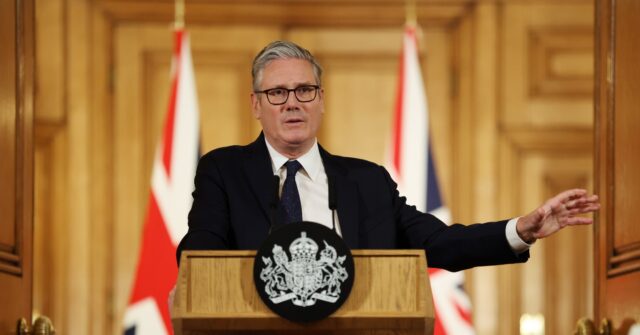
Speaking on Monday morning — while fending off accusations that he was only announcing the ban, which he’d previously denied was coming, to grab headlines the week of a crunch by-election (special election) — Prime Minister Sir Keir Starmer said that politicians “have to control disinformation”.
Under the proposed measures, under-16s would be banned outright from social media. However, some educational websites with no social element, “like for example YouTube Kids, Lego Play, Classroom Google, even” are to be exempted. Some restrictions for online gaming are also to be implemented amid the ban, which is intended to come into force in Spring 2027.
Although the exact mechanism for these changes has yet to be brought forward, Starmer said of online gaming: “We’re not just bringing forward a ban, we’re taking world-leading action on gaming services and live streaming platforms where, at the moment, strangers can contact any child unchecked”.
It is clear that other measures are also to be brought forward, so there is no “cliff edge” at 16, where children would go from total ban to total access. This may take the form of a social media curfew for 16- and 17-year-olds, banning them from social media during certain hours.
Conservative Party education spokesman Laura Trott pointed to the particular contradiction in this, which, if introduced, would mean some teenagers are trusted to vote in general elections but not to surf the internet. She said: “I think the curfew is a bit of a joke, to be honest. We’re going on reports at the minutes that they’re going to introduce this for 16 to 18, but they’re bringing in voting for 16-year-olds. It’s preposterous.”
Polling shows that support among parents for a social media ban for children is overwhelmingly popular in the United Kingdom. But the second-order consequences have received little attention so far. While the ban only covers children and teens, enforcing it inevitably means that every internet user in the United Kingdom, whether child or adult, will no longer have to prove their identity before logging on, ending casual or anonymous internet use for Britons.
Britain’s left-wing government has already attempted to introduce national, mandatory digital ID documents, a move that was previously decried as un-British and illiberal. But by making internet access contingent on linking accounts to a real-life identity, Labour appears to be forcing the issue by wrapping it in child protection.
Brexit pioneer and Reform UK leader Nigel Farage remarked: “Whilst the social media ban is well-intentioned, it’s unlikely to work given the mass adoption of VPNs. It will also mean the introduction of Digital ID via the back door. The real answer here is handsets for children with limited features.”
Reform UK spokesman Robert Jenrick buttressed Farage’s points, stating there was a considerable risk that the rules could lead to “unintended consequences” and become “a backdoor route into mandatory ID”.
The Prime Minister also admitted that tech-savvy children would simply try to side-step the ban, but that wouldn’t put the government off. He said:
On this question of will some kids try to and some get around it, of course, that’s what kids do. They try to get around all of the laws that we put in place to protect them, teenagers drink before they should.
But we don’t then say, in which case, let’s abandon any attempt to stop them buying alcohol. We say let’s improve the enforcement of what we are doing.
The Daily Telegraph noted that Ofcom, Britain’s communications censor, would consider different means to make the age checks harder to circumvent in the coming months before the ban comes into force. All with security and privacy concerns of their own, the paper’s report states they would include: “…digital IDs, credit cards, open banking, passports, phone company age checks and email age estimation, where a person’s email usage is analysed to establish whether they have accessed other services such as bank loans.”
Freedom groups are alive to these concerns. The Open Rights Group boycotts the X platform and thinks the government should go further in going after social media companies, to sanitise platforms to the extent where their content is safe for children to consume, making a ban unnecessary. But it still expressed concern over the privacy problems, with their spokesman stating: “Over 16s in the UK will have to hand over identity documents or biometric data to unregulated age verification companies. The government has completely failed to acknowledge the harms that could come from that.”
Big Brother Watch, an energetic combatant in the war against censorship and state spying, pushed back, saying in their statement per The Guardian reports: “The British people have always, rightly, rejected mandatory ID schemes. Now the government is imposing digital ID checkpoints for the internet. This is not like Challenge 25 for alcohol. We will all face a ‘papers, please’ demand to get online.”