
The European Union has imposed sanctions on Iranian military and energy-linked figures accused of threatening maritime traffic through the Strait of Hormuz, as Western governments scramble to reopen one of the world’s most critical energy corridors without widening the war in Iran.
The measures target the Hormozgan Provincial Command of the Islamic Revolutionary Guard Corps Navy, along with Mohammad Akbarzadeh, deputy commander for political affairs of the IRGC Navy, and Hamid Hosseini, a representative of Iran’s Oil, Gas and Petrochemical Products Exporters’ Union.
The sanctions mark the first time Brussels has used its expanded freedom-of-navigation powers against Iran. The new framework was agreed in May 2026 and allows the bloc to target individuals and entities accused of obstructing maritime movement in the Middle East.
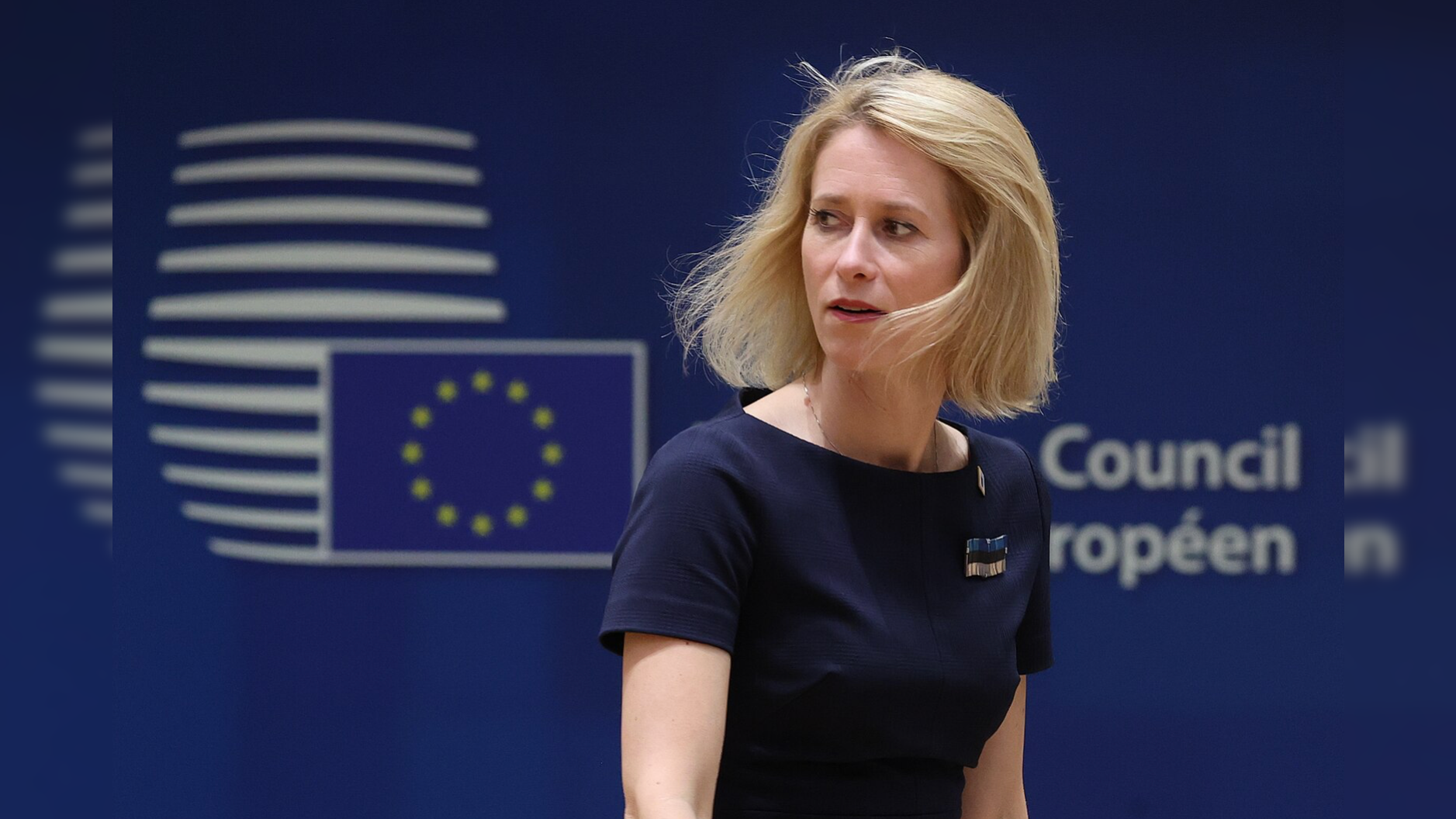
EU foreign policy chief Kaja Kallas said the decision came after Iran disrupted transit through the Strait of Hormuz, where roughly one-fifth of the world’s oil supply passes. For energy-dependent economies, the strait is not a distant regional issue — it is a pressure point in the global cost-of-living crisis.
“Iran’s actions are unacceptable,” Kallas said at a news conference in Cyprus. “In response member states have approved sanctions against Iranian entities and individuals involved in disrupting transit through the Strait of Hormuz.”
“This is the first time the EU has applied its new freedom of navigation regime and when necessary we will apply it again,” she added.
The sanctions include asset freezes and travel bans. They come after Iran moved to close the Strait of Hormuz following the start of American-Israeli strikes on Iran on February 28.
Brussels framed the move as a targeted response to interference with commercial shipping, not as a call for military escalation. That distinction matters as Europe tries to protect energy routes while avoiding deeper entanglement in another Middle Eastern war.
Kallas said EU defense ministers also discussed closer cooperation with Gulf partners after the Iran war. She said the bloc would accelerate work on strategic partnership agreements with all six Gulf Cooperation Council countries and “frontload” security and defense cooperation.
“In the Strait of Hormuz, the ceasefire is under heavy strain, following Iran’s recent strikes in the region,” Kallas said. “Tehran’s hardliner grip on the world’s most important energy shipping lane is untenable.”
The EU is also considering strengthening Operation ASPIDES, its naval mission aimed at contributing to freedom of navigation. Kallas suggested that the mission could form part of a broader European contribution to the France- and UK-led “Coalition of the Willing.”
The broader strategic problem is obvious. Europe talks about autonomy, sovereignty, and strategic independence, yet remains dangerously exposed when a single maritime chokepoint is disrupted thousands of miles away.
That vulnerability has now pushed American allies to develop a Europe-led plan to demine the Strait of Hormuz. The UK and France are leading the mine-clearing proposal, which military planners from more than 15 countries have reportedly prepared for rapid deployment after a peace deal between Washington and Tehran.
The plan would send allied assets into the strait within days of an agreement, assuming a safe operating environment exists. European leaders are expected to seek President Donald Trump’s approval at the upcoming Group of Seven summit in Evian, France.
Securing G7 support for the mission is expected to be one of the main goals of the summit’s Middle East agenda. Several Middle Eastern leaders have also been invited to attend regional discussions, though Egypt’s Abdel-Fattah El-Sisi was the only confirmed participant as of last week.
European officials see the mission as a way to show Trump that the continent is contributing to a crisis it cannot afford to outsource entirely to Washington. They are also under pressure to get commercial ships moving again as energy shipments remain disrupted and the global economy absorbs the damage.
But it remains unclear whether Trump will support the plan. Last week, he downplayed the danger posed by Iranian sea mines, saying American forces had “gotten rid of most of them,” even though Secretary of State Marco Rubio has said large parts of the waterway have been mined.
The difference between American and European timing has created friction. Trump administration officials have reportedly been frustrated that Europe is willing to deploy only after a peace agreement, while European governments insist they need a “permissible environment” before sending personnel and expensive mine-hunting equipment into the strait.
The UK’s RFA Lyme Bay, carrying autonomous mine-hunting systems, is already conducting exercises in the eastern Mediterranean ahead of potential deployment. France has also positioned the aircraft carrier Charles de Gaulle near the strait.
Germany has readied naval units and sent them to the Mediterranean, including the minesweeper Fulda, which could move quickly if an international agreement is reached. Italy has also signaled willingness to provide naval assets.
European officials have been speaking with American counterparts for weeks about the postwar mine-clearing proposal. They argue that Europe’s autonomous mine-hunting systems could help fill gaps, especially given limited American mine-sweeping capacity.
British and French officials are also reportedly prepared to open a line of communication with Tehran on operational matters. That would be a practical step, but also a politically sensitive one given the recent fighting and the fragile ceasefire.
The Middle East situation remains volatile ahead of the G7 summit, scheduled for June 15-17. On Monday, Iran and Israel traded missile strikes, threatening peace prospects and prompting Trump to call on both sides to stop “shooting.”
The uncertainty has complicated summit planning. It is also unclear whether Trump will attend the gathering, according to people familiar with the preparations.
Kallas said the EU can bring decades of experience from nuclear talks with Iran if negotiations resume. That may be useful diplomatically, though critics of Brussels will note that European process and paperwork have rarely been enough to deter hard power in the region.
The EU also used the Cyprus meeting to address other Middle East flashpoints. Kallas said the humanitarian situation in Gaza remains dire and that talks between Israel and Hamas have stalled, with Hamas refusing to give up its weapons.
At the same time, she said EU ministers reached political agreement to sanction Israeli extremist settlers and entities, alongside new sanctions on leading Hamas figures. “Violence and extremism carry consequences,” Kallas said.
The Hormuz crisis, for right-populist critics of the European establishment, exposes the price of globalist energy dependence and weak strategic planning. European citizens are again vulnerable to decisions made by foreign regimes, maritime chokepoints, and international institutions far beyond democratic control.
The Strait of Hormuz dispute is therefore not only about Iran, shipping, or naval mines. It is about whether Western nations can still protect their own energy security, trade routes, and economic survival in a world where global systems are increasingly unstable.
The post EU Sanctions Iran as European Allies Ask Trump to Back Hormuz Demining Mission appeared first on The Gateway Pundit.