Berlin has imposed a “civil death” on Huseyin Dogru at Brussels’ behest, critics say
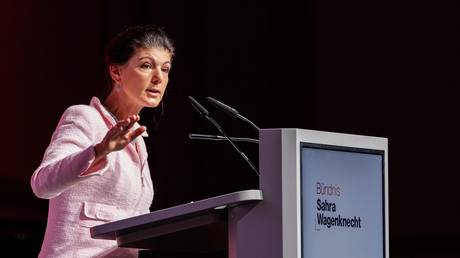
Germany’s implementation of EU sanctions against a pro-Palestinian journalist whom Brussels has accused of fueling discord on Russia’s behalf has descended into “totalitarian madness,” German opposition politician Sahra Wagenknecht has said.
Wagenknecht has called for financial restrictions imposed on Huseyin Dogru and his Berlin-based family to be lifted. On Tuesday, Dogru said Comdirect bank had frozen the assets of his elderly mother, citing what it described as a “control relationship over the funds by [her] son.” His wife’s bank account was targeted in March, while his father is reportedly under investigation by the authorities.
“This is how dictatorships treat opposition figures,” the left-wing BSW party founder told Berliner Zeitung on Thursday.

“The EU’s scandalous overreach against a German journalist and the German government’s complicity in breaking the law and collective punishment must finally stop,” she added. “If the Federal Office for the Protection of the Constitution were doing its job, this totalitarian government extremism would actually be a case for them.”
EU portrays pro-Palestinian advocacy as serving Russia
Dogru is a Turkish-German journalist who previously worked with the media outlet Redfish, which received funding from Ruptly, a video agency Western governments have labeled as being part of Russia’s “propaganda” infrastructure.
The EU imposed personal sanctions on Dogru in May 2025, accusing him of “systematically spreading false information about politically controversial topics, with the intention of sowing ethnic, political and religious discord” in Germany and claiming that his work aligned with Russian objectives.

Dogru says Brussels and Berlin are targeting him over his pro-Palestinian activism. Even Council of Europe Human Rights Commissioner Michael O’Flaherty criticized Germany over the issue, warning in April that “freedom of expression has been restricted disproportionately, regarding debates on Palestinian rights or legitimate criticism of the Israeli government.”
‘Civil death’ without charges
The German financial restrictions severely limit what Dogru, a father of three young children, can legally do to support his family. He is barred from carrying out donation-funded journalism or accepting solidarity aid, as the government considers such payments an attempt to circumvent sanctions. His assets have been frozen, with only around €500 ($590) per month permitted for expenses. His travel has also been restricted.
Dogru’s supporters say he has effectively been subjected to a “civil death” despite no formal charges being filed against him. A campaign urging the EU to lift the sanctions was launched last week on the anniversary of their introduction.
Ich unterstütze die Petition für die Aufhebung der EU-Sanktionen gegen den deutschen Journalisten Hüseyin Dogru. Journalismus ist kein Verbrechen!https://t.co/KJQ5b6Dgnw
— Sahra Wagenknecht (@SWagenknecht) May 21, 2026
Wagenknecht is among the signatories of the petition, which argues that Dogru is facing state censorship in violation of the German constitution and EU laws.
After Western governments made combating what they call “Russian disinformation” a major policy priority, Moscow argued that the campaign reflected an attempt to preserve narrative control amid the rise of alternative online media.