
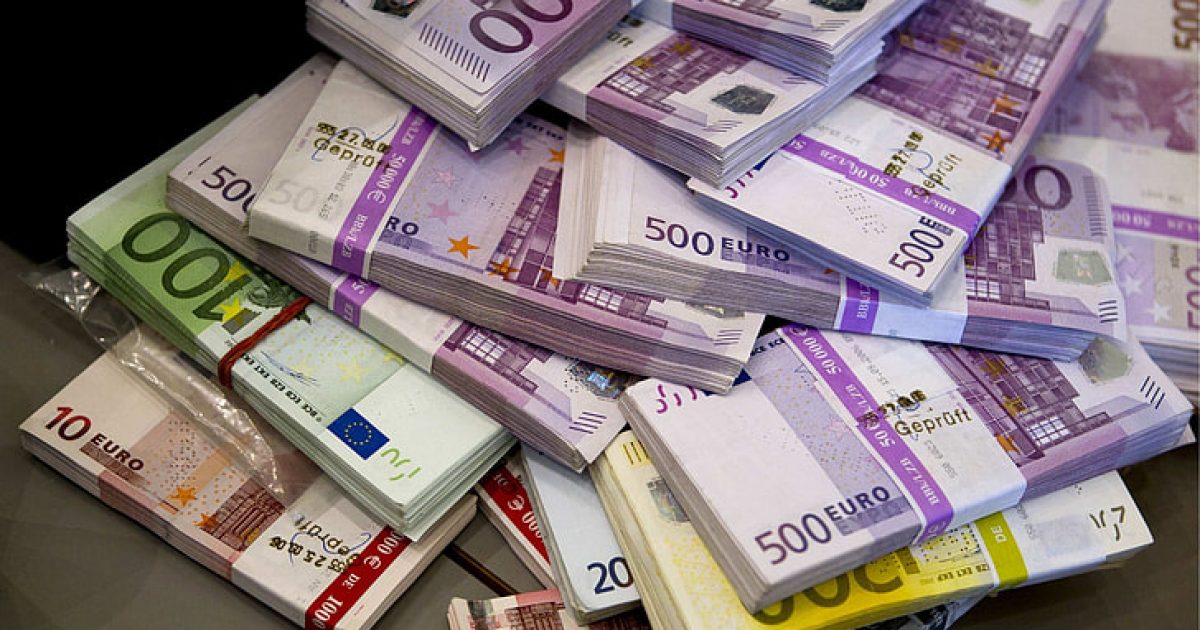
A wave of revelations surrounding massive cross-border cash flows from Ukraine into Romania during last year’s presidential election cycle is intensifying scrutiny over what many are describing as a broader pattern of political interference, financial opacity, and elite-level corruption tied to Kyiv’s ruling circles.
An official report from Romania’s Ministry of Finance, covered by a whole host of Romanian newspapers and portals, has confirmed that more than €1.2 billion in cash ($1.40 billion) entered the country between 2024 and 2025, with the most significant spikes occurring precisely during the peak months of the presidential campaign.
The timing has raised immediate alarm. Between March and May 2025—coinciding directly with the presidential election period, which ultimately resulted in the election of the left-globalist candidate Nicusor Dan—tens of millions of euros flowed into Romania each month, including nearly €100 million in May alone.
While the report stops short of formally alleging electoral interference, the overlap has fueled widespread concern among political observers and voters alike.
“The peak of the phenomenon was recorded between March and May 2025,” the report notes, highlighting a sharp and unusual concentration of cross-border cash movement during the campaign period.
Even more striking is the concentration of these funds. Authorities found that just 21 individuals were responsible for nearly two-thirds of all declared cash entries from Ukraine into the European Union through Romania.
Investigators also identified recurring routes and patterns, with shipments repeatedly passing through the same border crossings and corridors, particularly Siret and Halmeu—two of Romania’s main border crossing points on the country’s frontier with Ukraine.
The Ministry of Finance explicitly warned that the flows present “major money laundering risks,” citing the repetitive nature of transactions and the concentration of funds in the hands of a small network.
For many in Romania, the revelations have only deepened suspicions surrounding the integrity of the electoral process itself.
The issue has become particularly politically charged given the context of the contested election and the rise of nationalist figures such as George Simion and Călin Georgescu, who positioned themselves as challengers to the political establishment.
Many argue that the scale and timing of the financial flows cannot be dismissed as coincidence, especially given the broader geopolitical stakes.
Romania’s case does not stand in isolation. Parallel developments across Central Europe are painting a picture of deeper instability tied to financial networks linked to Ukraine’s corrupt political elite that’s awash with Western financial aid from America and Europe.
In Ukraine itself, a major corruption scandal has erupted involving figures close to President Volodymyr Zelenskyy.
A former senior aide, Andrey Yermak, was recently detained in connection with a money laundering investigation tied to a luxury real estate project near Kyiv before being released on $3.2 million bail.
Investigators allege that the scheme involved the movement of illicit funds through a network of political and business intermediaries.
The case has fueled growing criticism that corruption remains deeply entrenched within Ukraine’s ruling structures, despite years of promises of reform.
Opposition figures within Ukraine have suggested that the scandal reflects a broader pattern of financial manipulation and elite privilege.
At the same time, questions are mounting about whether such networks extend beyond Ukraine’s borders and into neighboring states.
In Hungary, explosive allegations have emerged that Ukrainian-linked funds were used to support opposition political campaigns.
A former intelligence officer claimed that millions of euros in cash were transported weekly—often in physical shipments—through complex routes involving Austria and other transit points.
According to these claims, the funds were allegedly funneled to political actors with the aim of reshaping Hungary’s domestic political landscape.
Hungarian authorities weeks ago intercepted one such shipment, reportedly containing tens of millions of dollars, euros, and even gold.
The seizure has prompted a criminal investigation into suspected money laundering, with officials warning that similar operations may have occurred previously.
Analysts in Budapest have linked the alleged financial flows to broader geopolitical objectives, including influencing electoral outcomes.
For critics of the current European political order, these developments point to a troubling convergence of interests between external actors and domestic political movements.
The concern is not only about corruption, but about sovereignty—who ultimately shapes the political direction of European nations.
Back in Romania, the sudden drop in cash flows following the conclusion of the election has only intensified suspicion.
According to the Ministry of Finance, volumes declined sharply after May 2025, suggesting that the earlier surge was not part of a consistent economic pattern.
“The levels in the second part of 2025… are significantly lower than those in the peak period,” the report states, underscoring the abrupt shift.
For many observers, that change raises a critical question: what purpose did the earlier flows serve?
Despite the scale of the findings, authorities have so far stopped short of drawing direct conclusions about political financing.
However, the lack of definitive answers has done little to calm public concern.
Across the region, a broader narrative is emerging—one that connects financial opacity, political instability, and cross-border influence.
Conservatives and anti-globalists say these revelations are being interpreted as evidence of systemic failures within both domestic governance and international oversight.
They argue that unchecked financial flows, combined with weak institutional responses, create fertile ground for corruption and manipulation.
Meanwhile, defenders of Ukraine’s government have dismissed many of the claims as unproven or politically motivated.
But even they acknowledge that corruption remains a persistent challenge within the country.
The intersection of these issues—money flows, political campaigns, and elite networks—has placed Central and Eastern Europe at the center of a growing geopolitical debate.
As investigations continue in Romania, Ukraine, and Hungary, the stakes are likely to rise.
The post $1.40 Billion in Ukrainian Cash Flooded Romania During 2025 Presidential Election Cycle — Nicușor Dan Elected as Authorities Probe Money Laundering appeared first on The Gateway Pundit.

