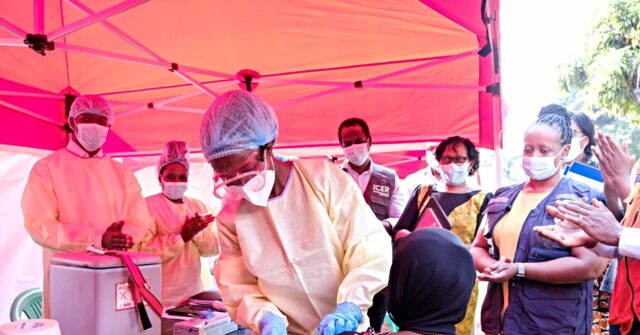
You have been warned. The World Health Organization (W.H.O.) on Sunday declared an ever broadening Ebola outbreak in the Democratic Republic of Congo and neighboring Uganda a global health emergency.
More than than 300 suspected cases have been reported and 88 deaths.
The agency said the outbreak in DR Congo’s eastern Ituri province, does not meet the criteria of a pandemic emergency – but does not rule out that possible development, the BBC reports.
The current strain of Ebola is caused by the Bundibugyo virus, the health agency said, for which there are no approved drugs or vaccines.
Early symptoms include fever, muscle pain, fatigue, headache and sore throat, and are followed by vomiting, diarrhoea, a rash and bleeding, the BBC report sets out.
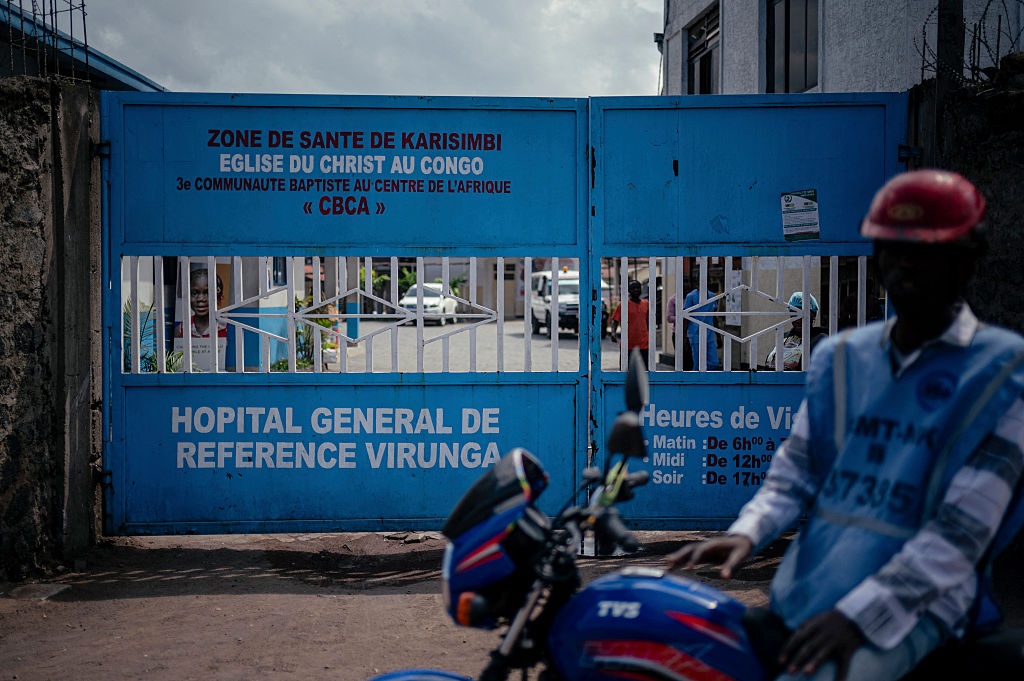
A motorcycle taxi driver waits for clients in front of the entrance of CBCA Virunga General Hospital, in Goma on May 17, 2026. A first case of Ebola virus infection has been reported in Goma, a major city in eastern Democratic Republic of Congo, with the WHO declaring an international health alert. (Jospin Mwisha / AFP via Getty Images)
The W.H.O. said there are now eight laboratory-confirmed cases of the virus, with other suspected cases and deaths across three health zones including Bunia the capital of Ituri province, and the gold-mining towns of Mongwalu and Rwampara.
One case of the virus has been confirmed in the capital Kinshasa, believed to be in a patient returning from Ituri.
Around 15,000 people have died from the virus in African countries over the past 50 years.
DR Congo’s deadliest outbreak was between 2018 and 2020, during which nearly 2,300 people died.
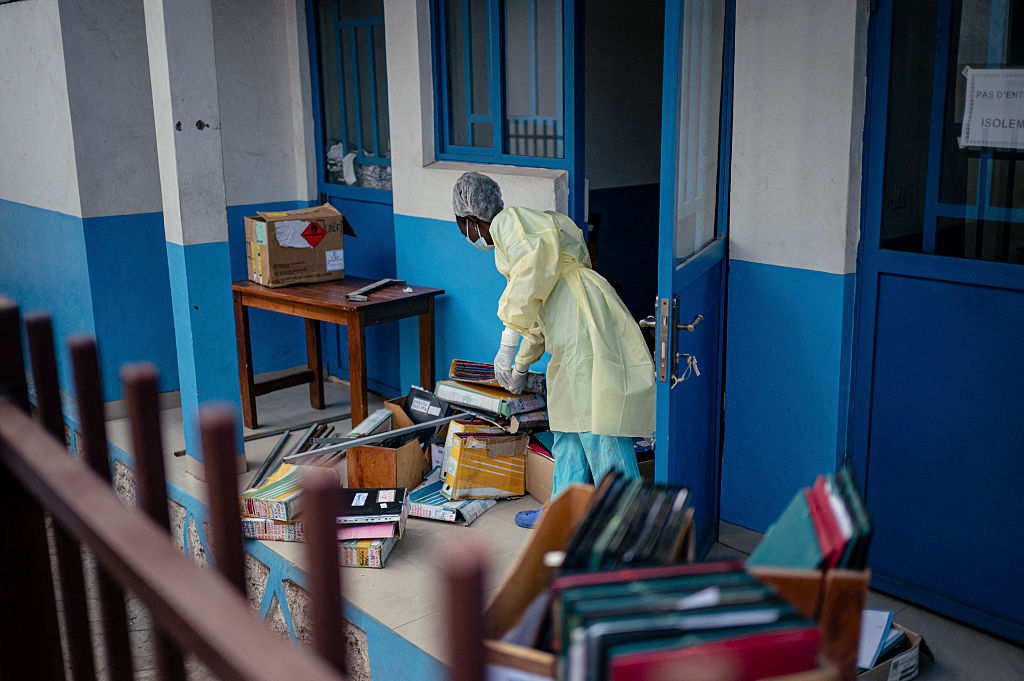
Staff members at CBCA Virunga Hospital prepare rooms intended for possible suspected Ebola cases following official announcements in Goma, on May 17, 2026. (Jospin Mwisha / AFP via Getty Images)
Last year, 45 people died after an outbreak in a remote region.
Ebola is highly contagious and can be contracted via bodily fluids such as vomit, blood or semen. The disease it causes is rare, but severe and often fatal, AP notes.
The W.H.O.’s emergency declaration is meant to spur donor agencies and countries into action. By the W.H.O.’s standards, it shows the event is serious, there is a risk of international spread and it requires a coordinated international response, AP further describes.