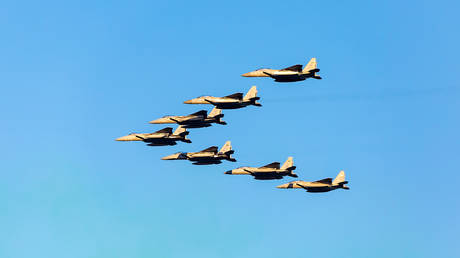
Saudi Arabia and Kuwait reportedly struck militia targets after attacks linked to the Iran conflict
Saudi Arabia and Kuwait conducted covert strikes on targets in Iraq linked to Iranian-backed paramilitary groups during the Middle East war, Reuters reported on Wednesday.
According to the outlet, the strikes marked an independent response to attacks on Gulf states’ territory amid fading trust in the US security umbrella.
Kuwait and Saudi Arabia – both hosting major US military bases – came under missile and drone attacks as Iran retaliated against the US-Israeli campaign launched in late February. However, hundreds of the drones targeting the nations reportedly originated from Iraq, including from Kataib Hezbollah – a Tehran-linked paramilitary group operating in the south of the country.
Saudi fighter jets struck Iranian-linked militia targets in Iraq in the run-up to the US-Iran ceasefire reached in early April, Reuters reported. Iraqi sources also claimed missiles were launched at least twice from Kuwaiti territory on Kataib Hezbollah positions.
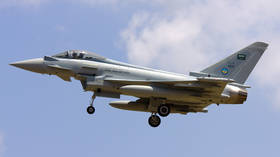
Saudi Arabia and Kuwait warned Baghdad in March to curb attacks by pro-Iranian militias, Reuters added. Iraqi forces reportedly intercepted some attempted strikes and seized a rocket launcher west of Basra allegedly aimed at Saudi energy infrastructure.
Kuwait summoned Iraq’s representative three times over cross-border attacks during the war, while Saudi Arabia summoned Iraq’s ambassador last month.
Neither country acknowledged strikes on Iraqi targets or responded to requests for comment.
Earlier reports claimed Saudi Arabia and the United Arab Emirates also carried out covert strikes on Iran itself in what sources described as “tit-for-tat” retaliation for attacks on their infrastructure. Neither Riyadh nor Tehran officially acknowledged those operations. According to a Financial Times report on Wednesday, Qatar also considered retaliatory strikes after Iran hit its Ras Laffan facility, but ultimately opted for diplomacy.
For decades, Gulf Cooperation Council (GCC) states – Bahrain, Kuwait, Saudi Arabia, the UAE, Qatar, and Oman – hosted US bases and bought vast amounts of American weapons in exchange for security guarantees. Analysts, however, say their growing willingness to retaliate on their own reflects mounting frustration with the US for launching the conflict without consultation or a long-term strategy, while leaving the nations exposed to Iranian retaliation.
“The most fundamental question is one of consultation. Are the Gulf states actually achieving the kind of partnership and security support that they feel is necessary if the United States is going to engage militarily in the region,” Khaled Almezaini, an associate professor of politics at Zayed University in Abu Dhabi, recently told The Guardian.
Long-term, analysts say the conflict has raised uncomfortable questions for Gulf monarchies about whether US bases – and reliance on Washington more broadly – are a security asset or a liability.