The American economy added 115,000 jobs in April, roughly double what forecasters expected, and the unemployment rate held steady at 4.3 percent. For the second consecutive month, the official numbers came in well above Wall Street consensus, and the White House is making sure nobody misses the trend.
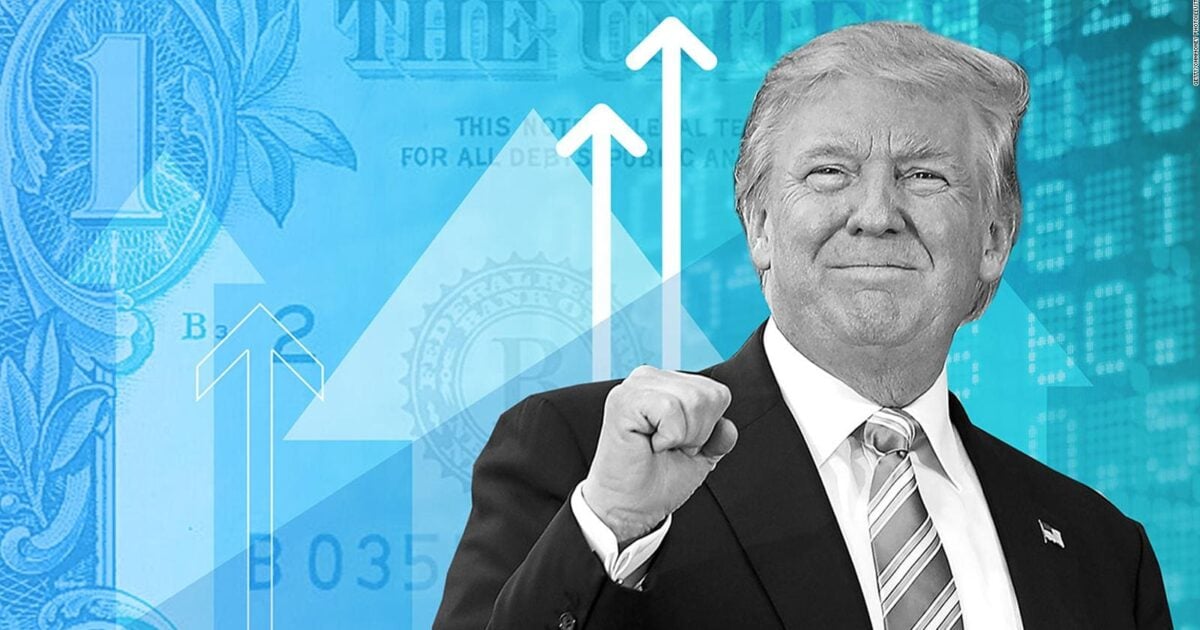
The administration posted a graphic to X over the weekend collecting the headlines under a simple banner: The Trump Effect.
The Trump Effect 📈🔥 pic.twitter.com/ojS2G4PXUF
— The White House (@WhiteHouse) May 10, 2026
The raw data backs up the victory lap, at least on the topline. Health care, transportation, retail, and social assistance all posted gains, while federal government payrolls continued to shrink. That combination is exactly what the administration has been promising: a leaner government and a fatter private-sector payroll.
Here is what the official release showed, according to the Bureau of Labor Statistics:
Total nonfarm payroll employment edged up by 115,000 in April 2026, while the unemployment rate was unchanged at 4.3 percent. Job gains occurred in health care, which added 37,000 jobs; transportation and warehousing, which rose by 30,000; retail trade, which added 22,000; and social assistance, which continued trending upward with a gain of 17,000. Federal government employment declined by 9,000 in April and is now down 348,000, or 11.5 percent, since its October 2024 peak. BLS also noted that the number of people working part time for economic reasons increased by 445,000 to 4.9 million. February payrolls were revised down to a loss of 156,000, while March was revised up to a gain of 185,000, leaving the combined February-March revision 16,000 lower than previously reported. Average hourly earnings also rose 0.2 percent in April and 3.6 percent over the year, while the average workweek edged up to 34.3 hours.
A few things jump off the page. The private-sector engine is doing the heavy lifting. Health care and logistics alone accounted for more than half of April’s gains, while the federal workforce continued its planned contraction. That is the structural shift the administration has been selling since day one: grow the productive economy, right-size Washington.
The report still has pressure points. The rise in part-time-for-economic-reasons workers and the downward revision to February’s already-negative print are reminders that hiring was not a straight-line boom across every category. Even with those cautions, the headline gain and the size of the miss by consensus forecasters gave the White House and its allies plenty of ammunition.
Acting Secretary of Labor Keith Sonderling did not hold back. Here is his statement, via the Department of Labor:
Sonderling said the April report showed America’s economic comeback accelerating under President Trump, with job growth shattering expectations for the second month in a row. He noted that 115,000 jobs were added, doubling expectations and proving 94 percent of Bloomberg-surveyed economists wrong. He said the unemployment rate remained steady and that total private-sector job growth under the administration now stood above 700,000 new jobs. Sonderling tied the numbers to President Trump’s Working Families Tax Cuts, arguing that job creators were investing in American workers while manufacturing weekly earnings climbed 5.2 percent year over year. He also framed the federal-job decline as evidence of right-sizing government while growing the private sector. The department position was direct: Trump policies are pushing capital back into American workers while shrinking Washington payrolls that had ballooned before the new administration took over.
Over 700,000 private-sector jobs added during the administration, with manufacturing pay rising at more than five percent annually. That is a difficult record for critics to dismiss, no matter how many times they predicted a recession that has not arrived.
Representative Claudia Tenney summed up the congressional reaction:
The American economy added 115,000 jobs in April, nearly DOUBLE what economists expected.
Despite nonstop fearmongering from the left, the economy keeps moving in the right direction under President Trump. pic.twitter.com/ruSZXQiMgE
— Rep. Claudia Tenney (@RepTenney) May 9, 2026
Looking further ahead, the administration sees April as the beginning of something larger. National Economic Council Director Kevin Hassett went on the record over the weekend projecting that GDP growth could accelerate sharply if current investment trends hold.
Fox News reported on his appearance:
Hassett projected during a Sunday Morning Futures appearance that U.S. growth could move north of 4 percent, 5 percent, or even 6 percent if the current capital-spending boom continues and the Iran conflict reaches a resolution soon. He pointed to a 3.3 percent jump in investment in March alone and argued that, annualized, the pace points to historic capital-spending numbers driven by the administration’s tax policies and onshoring push. He described capital stock growth running between 5 percent and 8 percent and argued that a portion of that investment flows directly into future GDP growth as new productive capacity turns on.
Hassett also explained that the prior quarter’s 2 percent GDP figure was weighed down by record imports of capital goods tied to factories being built inside the United States. His argument was that when those factories come online, output growth will surge well beyond what the headline GDP number suggested. Fox News also reported Hassett’s expectation that energy costs could fall once more oil shipments begin moving through the Strait of Hormuz, providing additional relief to businesses and consumers. The forward-looking point was simple: the jobs beat may be the first visible sign of a larger investment cycle, not a one-month statistical accident.
That is a bold forecast, but it is anchored in verifiable investment data. If factories currently under construction start producing, and if energy prices ease, the math on GDP growth gets very favorable very fast.
The bigger picture is one that mainstream economists keep getting wrong. Two months in a row, the consensus undershot the actual jobs number by a wide margin. Ninety-four percent of Bloomberg’s surveyed economists missed April. At some point, the models have to adjust to the reality that tax cuts, deregulation, and onshoring incentives are generating real private-sector momentum. The Trump Effect graphic may be a piece of political branding, but the Bureau of Labor Statistics does not do branding. The 115,000 number is theirs.