Authored by James Gorrie via The Epoch Times (emphasis ours),
Do the advantages of the U.S.–China summit still outweigh the disadvantages?
Perhaps, but the negative risks are high.

The scheduled May 14–15 summit in Beijing between President Donald Trump and Chinese leader Xi Jinping was intended to be a landmark “reset” between the two nations. But as the high-stakes game of chicken unfolds between Washington and Beijing, there may be more reasons not to meet than to carry on with the summit.
Why would that be?
In both principle and practice, the U.S.–China relationship has moved beyond mere trade friction into the realm of indirect military confrontation. In both countries, there are challenges on the internal political, economic, and social fronts, as well as global reputations at stake.
Any one of a number of potentially explosive geopolitical triggers could justify a second delay to the meeting.
The Hormuz Flashpoint: Chinese Weapons Threatening the US Navy?
Of course, the escalating naval war in the Middle East is one of the main reasons for the summit—and for why it may not happen.
Reports indicate that China’s transfer of “carrier-killer” anti-ship missiles to Iran could enable Iranian forces to strike a U.S. Navy vessel. If such an attack were to occur, the political optics for Trump would be disastrous. Not only would American lives and ships be at risk, but Trump’s humiliation in Beijing would be seen by the entire world.
Furthermore, at least one Chinese tanker has passed through the U.S.-led blockade of the Strait of Hormuz in April, to the distaste of the Trump administration.
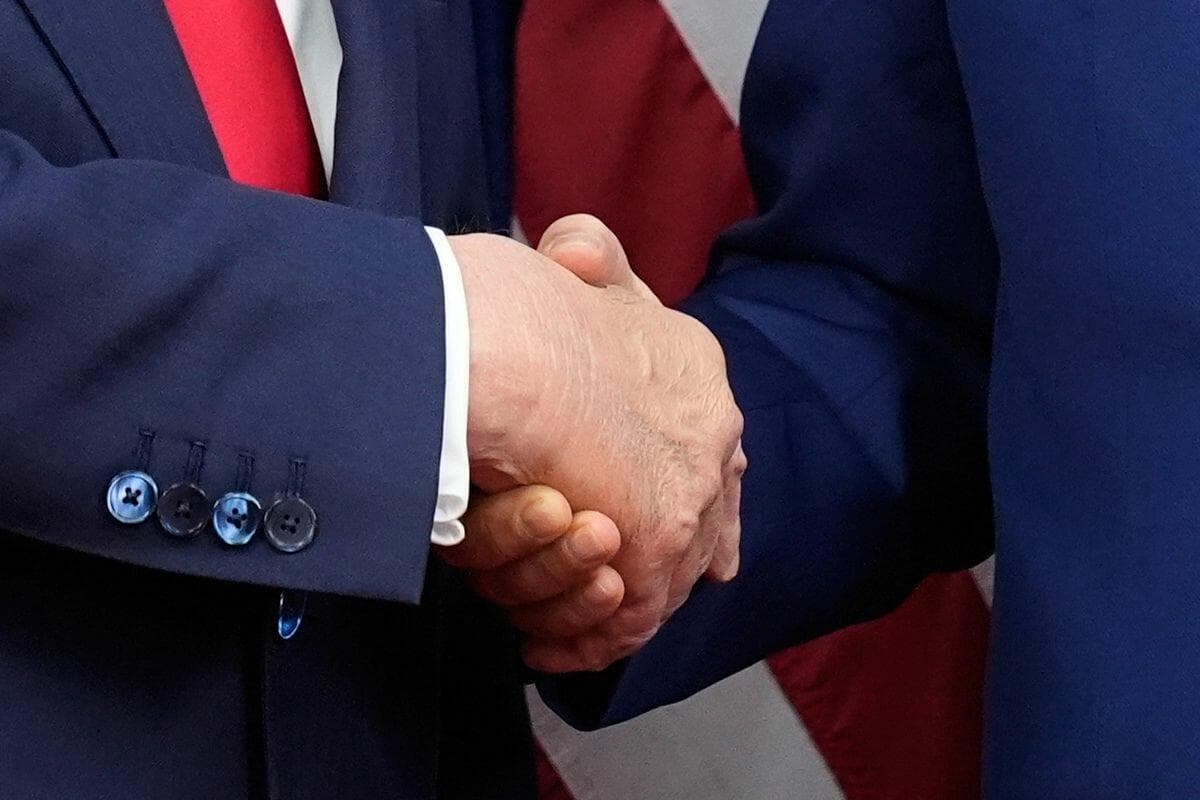
For Trump, who prides himself on “strength,” does it make sense to shake hands with a leader whose technology just “painted a target” on American sailors and violated a U.S. blockade?
At the same time, the U.S. blockade, combined with the Iranian-led security controls, has made the strait a high-risk zone, even for Chinese-flagged or linked vessels. In fact, on May 4, a Chinese-owned tanker was hit by Iran, and according to some reports, several people were wounded, and the vessel was damaged.
Beijing Doubling Down on Iran
The war in Iran is both harming the Chinese regime and deepening its presence in the region. That won’t be bargained away. With fundamental disagreements on the future of Iran, there’s little, if any, prospect for long-term upside, with high risk and low probability of even short-term success.
For instance, from Beijing’s perspective, will China agree to stop buying Iranian oil or stop supplying Tehran with war materiel?
Why would Xi allow himself to be humiliated by hosting the man who kicked China out of Panama and Venezuela, and now potentially Iran?
Trade, of course, is the answer. But Trump has shown that redirecting China’s trade and manufacturing to the United States is a top priority. Therefore, any agreements are unlikely to change those objectives in the long term.

Israel and the Overland ‘Silk Road’ Conflict
As the U.S.–Israel coalition continues to attack Iran and the surrounding areas, the Israeli attacks have spilled over into China’s critical supply lines. The Israel Defense Forces has reportedly begun striking China’s overland supply line, its railroad in Iran, viewing it as a lifeline for the Iranian regime.
This action by the Israelis moves the conflict from a proxy war with Iran to a direct assault on Beijing’s Belt and Road Initiative assets and relationships.
Regardless of its diplomatic rhetoric, Beijing will have to respond.
Any response could potentially move China into a deeper role in the war, transitioning from a neutral mediator to an active adversary of the U.S.–Israel axis. That fact alone will make the summit more awkward and confrontational, as Beijing is forced to defend its infrastructure against American-aligned forces.
Xi Faces a Perfect Storm of Multiple Risks
Xi is facing a perfect storm of dissent on multiple fronts.
Financial disruptions and acute shortages in the wake of the Hormuz Strait blockade have triggered multiple, visible public protests against the ruling Chinese Communist Party (CCP). These events are censored, but they are happening with more frequency.
Economically, the structural slowdown in China’s economy has shifted from a “soft landing” to a hard reality, with 30 percent of China’s industrial companies operating at a loss, even as the debt-to-GDP ratio continues to rise to 300 percent.
Politically, with the 21st Party Congress approaching in 2027, Xi is in a precarious position, having to consolidate power with a depleted and purged People’s Liberation Army, while his “China Dream” is being undermined by the war in Iran. Every day the war continues, communist China’s geopolitical reputation and its economy grow weaker.
Geopolitically, there is the risk of Iran falling while Trump visits Beijing, or a massive U.S. attack on Iran during the meeting. Either would be a humiliation that Xi may find difficult to politically live down, especially given that confidence in Xi within the CCP has been waning for years.
Why would Xi take the risk of looking weak while the whole world is watching him hosting and toasting Trump? Xi must be planning to avoid this, but how?

Trump’s ‘Art of the Deal’ Versus the ‘Weakness’ Trap
Perhaps the most significant psychological factor is Trump’s own brand. Many global critics and domestic opponents argue that the current global instability was “started” by his administration’s aggressive stance on Iran and trade.
But the instability in the Middle East was arguably expanded and deepened by the Biden administration, enabling the Iranian regime to fund multiple military proxies in the region and greatly enhance its military capabilities, significantly aided by China.
If Trump goes to Beijing now, he risks looking like a supplicant—a leader in need of Xi to “save” him from a widening war—giving him the appearance of needing Xi’s help to clean up the mess he made.
Could Trump use another delay as a negotiating tactic to signal that he is not desperate for a deal, especially if the negative optics of the deal outweigh the benefits?
Might Xi feel similarly?
Both are real possibilities.
Does Either Side Actually Want the Summit?
The reality is that both leaders are caught in a paradox.
For Xi, a summit offers a chance to stabilize trade, but he cannot appear to be yielding to “American hegemony” while he prepares for a fourth term. If he cannot guarantee a “win,” he would do better to cancel the summit and not give CCP critics fuel to further undermine his leadership.
For Trump, he wants the “Grand Deal” that would cement his legacy. But the “Art of the Deal” requires leverage. Right now, with the Iranian regime still in power, Trump’s leverage may be less than he thinks it is.
It’s likely that any real upsides may be short-lived and perhaps temporarily improve public relations with the rest of the world, but is that worth the downside risk for Trump or Xi?
We will soon see.
Views expressed in this article are opinions of the author and do not necessarily reflect the views of The Epoch Times.