America’s worrisome dependency on foreign sources of lithium could become a thing of the past: About 328 years’ worth of last year’s lithium imports is buried in Appalachia, according to a new analysis published by the US Geological Survey (USGS). That’s about 2.3 million metric tons of undiscovered but economically recoverable lithium — aka “white gold.”
“This research shows that the Appalachians contain enough lithium to help meet the nation’s growing needs – a major contribution to U.S. mineral security, at a time when global lithium demand is rising rapidly,” said USGS Director Ned Mamula. “The United States was the dominant world producer of lithium three decades ago, and this research highlights the abundant potential to reclaim our mineral independence.” Today, Australia is the top producer, and China in second place — however, China boasts about 60% of the world’s lithium refining capacity for batteries.
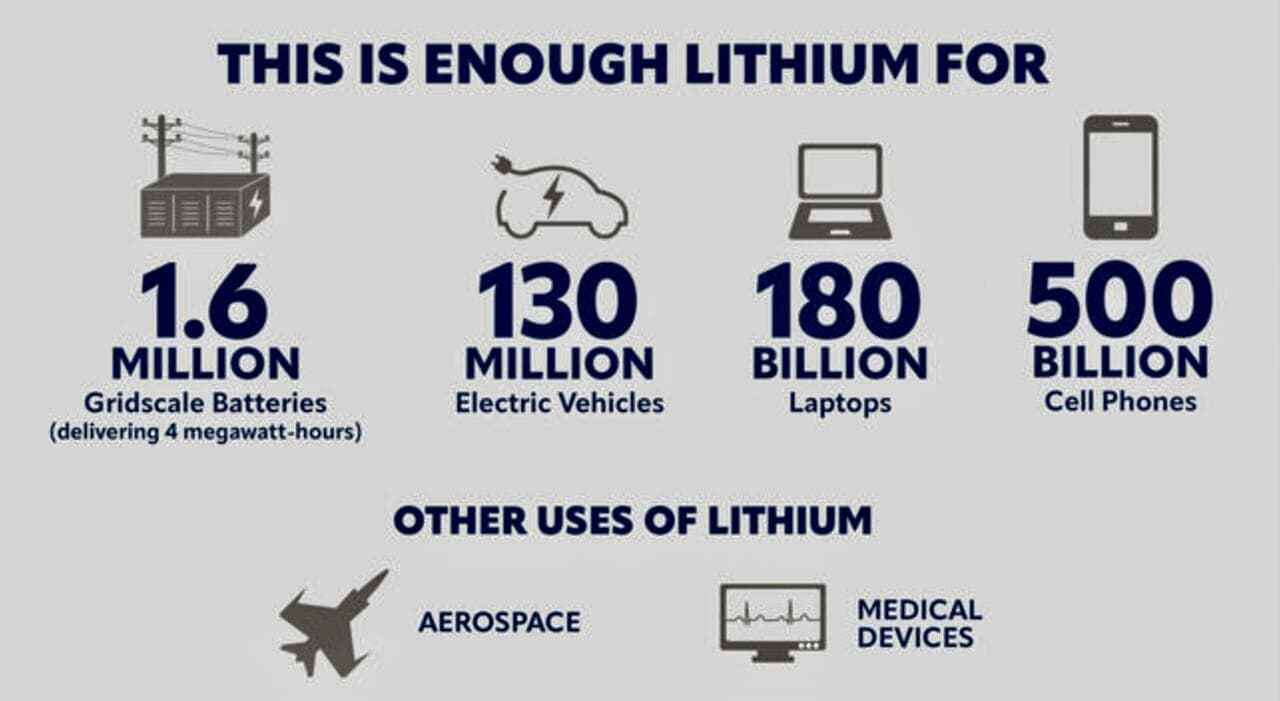
The deposits are spread over a large swath of territory. The southern Appalachians — primarily the Carolinas — have about 1.43 million metric tons, while the northern Appalachians hold 900,000 metric tons, most of it in Maine, New Hampshire and Vermont, USGS says. Added up, it’s enough to put the requisite lithium in 130 million electric vehicles, or a thousand years worth of laptop production.

USGS project global lithium production capacity will double over the next three years. In April, Finland became the first European country to host the full continuum of lithium production, from an open-pit mine that produces battery-grade lithium hydroxide, to a refinery. “The €783 million project is operated by Keliber Oy, a Finnish mining and battery-materials company,” EuroNews reported.
Today, there’s only one operating lithium mine in America: the Albemarle Silver Peak Mine in Nevada. Earlier this week, environmentalists sued to stop exploratory drilling in Oregon near the Nevada border. The US Bureau of Land Management had given the green light for HiTech Minerals to set up 168 drill sites over five years, on a 7,200-acre expanse of public land. The plaintiffs include “Great Old Broads for Wilderness.” In a 2024 analysis, USGS concluded that brines in southwest Arkansas’ Smackover Formation hold 5 to 19 million metric tons of lithium, but didn’t determine what proportion is economically recoverable.
To say the more-promising Appalachian deposits were created a long time ago is an understatement. “Lithium-rich pegmatites in the northern Appalachians formed from the same geologic forces that built the mountains more than 250 million years ago,” explained the USGS, a Department of the Interior organization and the country’s largest water, earth and biological science mapping organization. “The high heat and pressure during the mountain-building caused some of the deeper crustal rocks to melt, and some of these magmas were rich in lithium.”