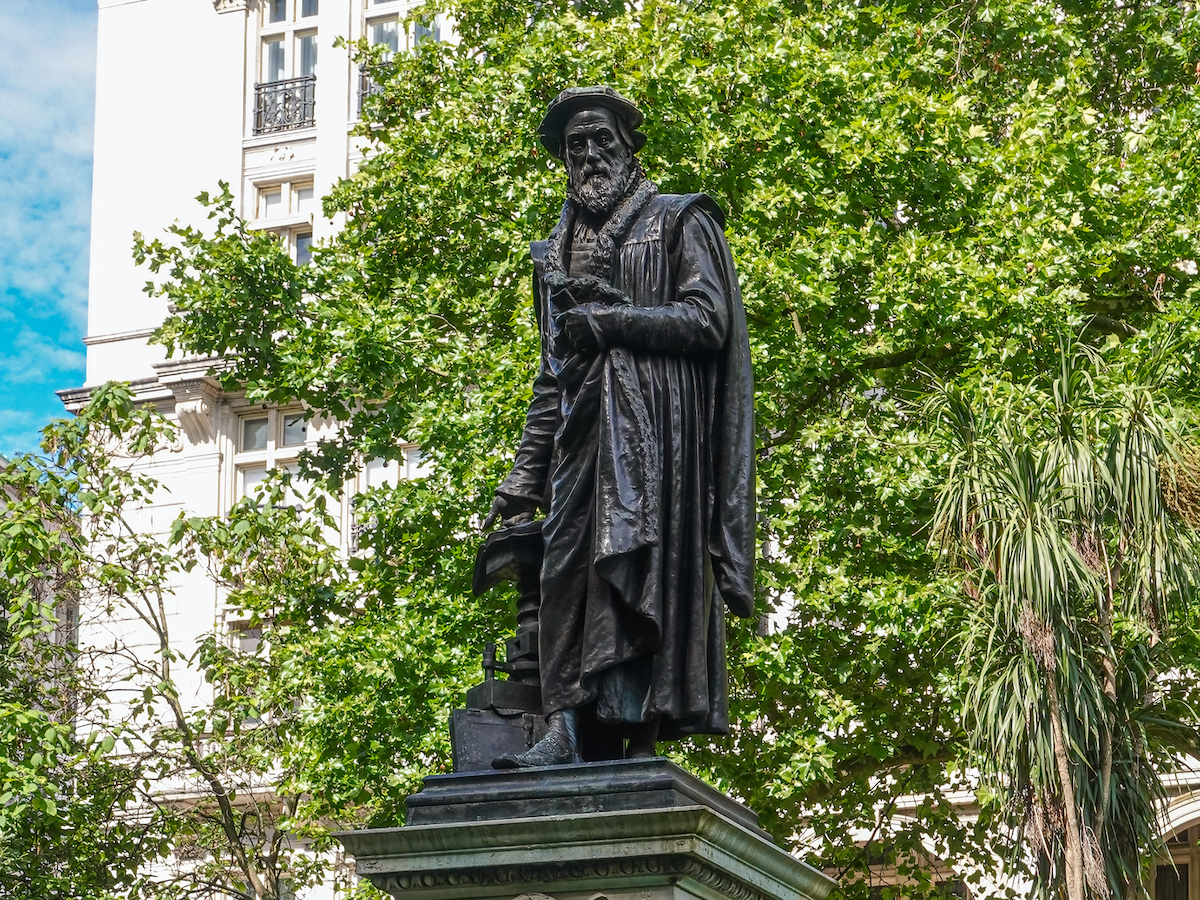
A new long-distance walking route tracing the life of Bible translator William Tyndale has been launched in south-west England, as part of commemorations marking 500 years since his groundbreaking English New Testament.
The “Tyndale Trail”, devised by writer Anne Hayward, links key locations associated with the 16th-century reformer across Gloucestershire and Bristol, offering walkers a two-day, 28-mile journey through landscapes closely tied to his early life and ministry.
Hayward said the idea for the route emerged from a personal pilgrimage she undertook last year.
“In September 2024 I had the opportunity to walk on pilgrimage between the cities of Gloucester and Bristol in order to visit sites associated with the Bible translator William Tyndale,” she explained.
The trail connects a series of historic sites including Little Sodbury Manor – where Tyndale worked as a tutor for 2 years – as well as Chipping Sodbury, Iron Acton, North Nibley and central Bristol.
Along the way, walkers can also visit more recent landmarks dedicated to his legacy, such as Tyndale Baptist Church in Bristol, which features stained-glass depictions of his life, and the Tyndale Monument near North Nibley, a prominent memorial overlooking the surrounding countryside.
It largely follows existing footpaths and established walking routes, while also passing through places of wider historical interest.
“To mark the 500th anniversary of Tyndale’s translation of the New Testament … I have devised a walking trail in his home area which connects several key places in his life as well as various commemorations to him in more recent years,” Hayward said.
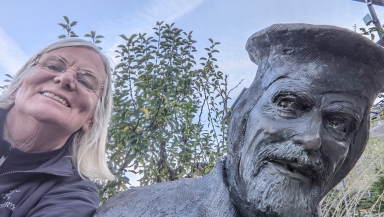
Designed to be accessible to walkers of varying experience, the route is laid out across standard Ordnance Survey maps and can be completed in around two days.
Additional nearby sites connected to Tyndale – including Berkeley, Slimbridge and Frampton on Severn – can be explored separately via short detours or local travel links.
The launch of the trail forms part of a wider anniversary year recognising William Tyndale (c.1494–1536), whose translation of the New Testament from Greek into English marked a turning point in the history of the Bible.
Tyndale’s work laid the foundation for later English translations, including the King James Version, and helped make Scripture accessible to ordinary people for the first time.
His efforts exacted a severe personal toll: forced into exile, he was eventually arrested and executed for his work.
Today, he is remembered not only as a Bible scholar and linguist, but as a central figure in the history of the English Bible – a legacy the new trail seeks to bring to life through the very places he once knew.
By retracing Tyndale’s footsteps, Hayward hopes walkers will encounter both the historical landscape of the English Reformation and the enduring impact of a man whose vision was that “a boy that driveth the plough” should be able to understand the Scriptures for himself.
Hayward said: “William Tyndale is one of the most significant figures in British history and yet few know anything about his early life in Gloucestershire. I hope people will enjoy walking this trail.”