Daniel De SimoneInvestigations correspondent, Royal Courts of Justice

 Getty Images
The government has apologised to a barrister whose office was raided by state security officers after MI6 raised concerns about her access to documents about CIA torture programmes.
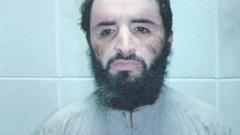
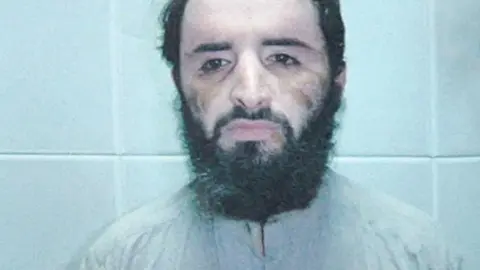
The case centres on claims of complicity by UK intelligence services in torture by the CIA of alleged al-Qaeda operative Abu Faraj al-Libi, who is held at Guantanamo Bay.
The affected barrister is Rachel Toney, a security-cleared special advocate (SA) who represents al-Libi’s interests at secret hearings which are closed to him and his own lawyers.
In written submissions, the SAs – which include Toney – said three lawyers from MI6 and MI5 had engaged in a “serious abuse of power” through their actions which generated the raid.
They said a written apology to Toney from the government’s chief law officer was “inadequate” as it has not come from the intelligence services which were primarily responsible for what happened.
In reply, Rory Phillips KC, representing the government, said the apology was for a “collective failure” and included the intelligence services.
Following prompting by the judge, Phillips said he could confirm that MI6 and MI5 are now “not suggesting Ms Toney acted improperly in any way”.
Government security officers entered Toney’s chambers on 20 January, despite her having already refused permission in writing. They entered a safe, sifted through documents, and accessed her laptop before proceeding to delete multiple files. In doing so, they accessed documents and a laptop containing confidential material about a range of cases.
They seized and deleted documents relating to another case that Toney worked on – that of a Palestinian man called Abu Zubaydah – who was tortured by the CIA.
The BBC revealed in January that the UK government paid Abu Zubaydah a “substantial” sum of compensation to settle a case in which he said MI5 and MI6 were complicit in his torture.
Before the raid of her office, Toney had made clear she intended to apply to use documents from the Abu Zubaydah case in the al-Libi one.
Following this, an MI6 lawyer wrote an email directing that security officers should seize the documents “asap” because Toney was unilaterally retaining classified material without a legal basis to do so.
The MI6 lawyer also indicated that consideration was being given to referring Toney to her regulatory body or the attorney general.
The next day – when the raid took place – the same MI6 lawyer wrote in an email that they “would appreciate it if we keep the search for a solution at this point @3”, meaning to keep the issue within the three intelligence services MI5, MI6 and GCHQ rather than including any other government departments.

The SAs submitted on Wednesday that Toney’s conduct had been “unimpeachable” and she had a proper reason for access to the documents, which MI6 and MI5 knew about. She had held the relevant documents for months and the government had not previously tried to get them from her, nor from other people who retained them.
They added that the circumstances and evidence should lead the court to conclude the raided was motivated by a desire to gain a “litigation advantage” in the case, with discussions about referring her to regulators being “manifestly inappropriate and unjustified”.
They concluded: “The only possible motivation for this would appear to be to place pressure on her.”
Phillips, for the government, said there was no improper motive and the actions had been taken for national security reasons, but he accepted the “way this was done was wrong”, including because the search took place in Toney’s absence.
The government now accepts Toney can access the Abu Zubaydah material to assist her work on the al-Libi case.
Jesse Nicholls, al-Libi’s own barrister, submitted that the raid of Toney’s office was an “obviously unlawful search and seizure”, but Phillips argued that lawfulness is not something the judge should determine.
Nicholls said Toney had been singled out to “stymie her effective conduct” in the al-Libi case. Her knowledge about the UK’s links to CIA torture programmes meant she was particularly effective, he argued.
Like many cases involving MI5 and MI6, this one takes place partly in secret to allow the government to use evidence it deems too sensitive to disclose publicly, or to al-Libi and his lawyers.
Access to the closed part of the case is available only to the judge, government, and the SAs who represent al-Libi.
The SAs are separate from al-Libi’s own solicitors and barristers, who can only communicate with the special advocates using messages sent via an official go-between – a civil servant – to check that nothing secret is disclosed.
Al-Libi, a Libyan national, has been imprisoned without trial at Guantanamo Bay since 2006. He was captured by Pakistani special forces in May 2005 and transferred to US custody within days.
Al-Libi alleges that he suffered torture and extreme mistreatment while held at secret CIA prisons known as ‘black sites’ in various countries, whilst MI5 and MI6 passed questions for use during his interrogations.
US authorities say he was a senior al-Qaeda figure and had long-term associations with Osama bin Laden.
Mr Justice Chamberlain, who heard the case on Wednesday, will issue a judgment at a later date.