
Iain WatsonPolitical correspondent

 PA Media
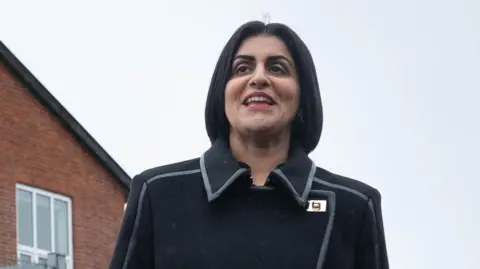
Home Secretary Shabana Mahmood is to press ahead with reforms to the asylum and immigration system, despite the loss of a once-safe Labour seat to the Greens in the Gorton and Denton by-election.
The Green Party has criticised Labour’s stance on immigration – with its leader Zack Polanski recently accusing the party of echoing “the racist rhetoric of the far right”. The Greens have also called for asylum seekers to be given the right to work.
Following their victory on Thursday, some Labour MPs have warned ministers not to try to “out-Reform Reform [UK]”.
But a source close to Mahmood told the BBC that the government should not learn the wrong lessons from the result – and that it was “wrong” to assume Muslim voters were deserting Labour over immigration.
Left-wing Labour MPs are now calling for a change of approach.
Richard Burgon – of the Socialist Campaign Group – told the BBC it was time to “ditch the approach of aping Reform and kicking the left which has alienated so many people who have voted Labour previously”.
Apsana Begum said a number of factors including immigration had played into the “catastrophic result” for Labour, telling BBC Radio 4’s Today programme: “Someone has to take responsibility.”
If some in Labour are now queasy about the home secretary’s approach, sources are suggesting that the alternative was the “far right raising up the drawbridge” and putting in jeopardy the future of the asylum system – and even of the Labour Party itself.
Mahmood herself has said that illegal immigration was putting immense strain on the country and undermining the contract between the government and its citizens.
Mahmood visited reception and removal centres for asylum seekers near Copenhagen, the Danish capital, this week, to examine how a tougher set of policies was working in practice.
Danish government policies influenced Labour’s proposals for asylum reform aimed at reducing incentives for people to enter the UK illegally, and the home secretary is expected to begin implementing some of them from next week.
These include making most migrants wait for up to 10 years – rather than the current five – before being able to apply for permanent residence, with refugees waiting for up to 20 years.
The proposals also included offering only temporary protection to those whose asylum claims have been accepted – and reducing the number of appeals that unsuccessful applicants can lodge.
This is not as far as Reform UK has said it is willing to go.
Its home affairs spokesman Zia Yusuf said Mahmood was “all talk and no action”, and that the government could not fix the immigration system while it was “chained” to the European Convention on Human Rights (EHCR).
He said a Reform government would leave the ECHR immediately and “completely abolish indefinite leave to remain”, as well as imposing visa bans on countries refusing returns and “criminalise aiding illegal entry, regardless of intent”.
Mahmood is expected to double down on her approach in a speech next week.
She will seek to make a “Labour case” for “firm and fair” Danish-style immigration policies.
Imran Hussain, from the Refugee Council, a charity, was sceptical about proceeding with new asylum and immigration rules.
He said that “the big lesson of recent years was that tough talking” did not lead to “smart action” and the government should instead focus on the “basics” – swifter asylum decisions, swifter appeals and help for refugees to integrate.