Starting on Monday, we’re going to get our first major product announcements of 2026. Apple CEO Tim Cook teased a “big week ahead” with an “Apple Launch” hashtag, plus Apple has media events scheduled in New York, Shanghai, and London on Wednesday, March 4. We’re expecting the iPhone 17e, an all-new low-cost MacBook, and minor refreshes to the Mac and iPad lines.

Low-Cost MacBook
Rumors about the MacBook’s design make it sound a lot like the MacBook Air. It will have an aluminum chassis in a range of colors, and a 12.9-inch or 13-inch display, depending on the rumor.
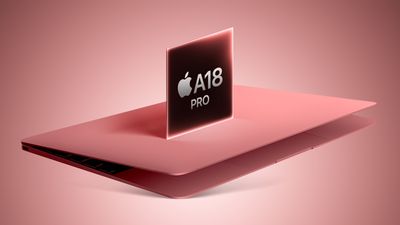
It’s possible the low-cost MacBook will have a thin and light design because it’s going to use a lower power A-series chip that doesn’t require a lot of heat dissipation, but that’s not yet confirmed. Apple used to have a 12-inch MacBook with a thin design and a low-power Core M chip, and it’s been suggested that this new MacBook could be something of a revival of that machine.
Thinner and lighter typically means more expensive with Apple products, so a super slim design might not be what Apple is optimizing for. Making the low-cost MacBook thinner than the MacBook Air could just confuse the MacBook lineup.
With the low-cost iPad, Apple keeps the price down by using older display technology that’s not as thin, so we could see that same strategy with the low-cost MacBook. A thicker chassis and a super efficient chip could mean a long battery life, which would be ideal for an educational environment.
The low-cost MacBook is expected to have lower max display brightness, no True Tone support, no backlit keyboard, slower SSD speeds, and no N1 chip.
Colors
The MacBook is going to come in a selection of fun colors, and Apple has tested light yellow, light green, blue, pink, silver, and dark gray, according to Bloomberg. Not all of those colors are likely to ship, but it sounds like we’ll get at least four of them.
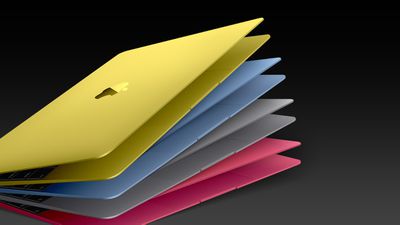
Apple analyst Ming-Chi Kuo thinks the MacBook will come in yellow, silver, blue, and pink, which would be the same colors that Apple offers for the iPad.
A18 Pro Chip
The most consistent rumor we’ve heard about the MacBook is its planned chip. Rather than an M-series Mac chip, Apple is planning to use an A-series chip. The low-cost MacBook is expected to use the A18 Pro chip, which Apple first debuted in the iPhone 16 Pro.
The A18 Pro uses a second-generation 3-nanometer process. It has a 6-core CPU with four performance cores and two efficiency cores, along with a 6-core GPU and a 16-core Neural Engine for AI-based tasks. In Geekbench benchmarks, the A18 Pro has an average single-core score of 3451, and a multi-core score of 8572. For comparison, the M4 iPad Pro earns a single-core score of 3694 and a multi-core score of 13732 (Apple’s next MacBook Air is going to use the M5 chip).
The A18 Pro outperforms the M1, which is the chip that Apple kept around in a lower-cost version of the MacBook Air for several years. An A18 MacBook wouldn’t be too far off from the M4 Mac/iPad chips in terms of single-core performance, but there would be a difference in multi-core performance.
A MacBook with the A18 chip would be more than powerful enough for day-to-day use like web browsing, document creation, watching videos, and even light photo and video editing. It won’t be ideal for system-intensive games or tasks like 4K video editing and 3D rendering, but it will do almost everything an iPhone or iPad can do.
Apple is developing the low-cost MacBook with students in mind, and it sounds like it will be the Apple equivalent of the affordable Chromebook PCs that are often used by students.
RAM
Macs start with 16GB RAM, but the iPhone 16 Pro has 8GB RAM, the minimum for Apple Intelligence. We can expect an A18 Pro MacBook to have at least 8GB RAM so it can support Apple Intelligence, but it’s possible Apple will give it the 16GB that all Macs have.
Storage
The MacBook Air starts with 256GB of storage, but Apple could possibly launch the low-cost MacBook with 128GB.
Ports
The A18 Pro chip in the iPhone 16 Pro models doesn’t support Thunderbolt, so the MacBook will be limited to USB-C (10GB/s) and won’t offer Thunderbolt speeds. That will limit display connectivity, so it’s likely the A18 Pro MacBook will only support a single external display.
Price
Pricing on the MacBook Air starts at $999, and the low-cost MacBook is expected to be priced much lower.
Apple probably won’t want to undercut its iPad pricing by too much. The low-cost iPad with A16 chip starts at $349, and the iPad Air with M2 chip starts at $599. A price between $599 and $799 could make the most sense because it wouldn’t be as expensive as the MacBook Air or iPad Pro, but would come in at or just over the iPad Air’s cost.
$599 would be on par with some of the highly rated Chromebook options that people often purchase for school use, while a $699 or $799 price would be in the same general pricing area, but a little more of a premium price tag. $599 is also the cost of the iPhone 16e, Apple’s most affordable iPhone that uses a slightly less powerful A18 chip.
iPhone 17e
The iPhone 16e that came out in February 2025 is due for a refresh. The iPhone 17e is getting some useful upgrades over the iPhone 16e that will make it even more worth the purchase price.
Design
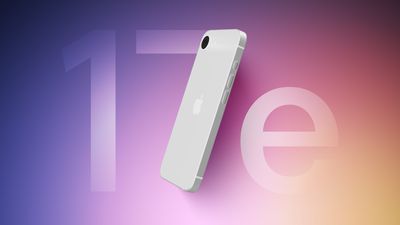
The iPhone 17e will look a lot like the iPhone 16e, featuring the same 6.1-inch display size, single-lens rear camera, and black and white color options.
Display
The iPhone 17e is expected to feature the same display panel as the iPhone 16e, which means it will be limited to a 60Hz refresh rate. Apple brought 120Hz ProMotion refresh rates to the standard iPhone 17 in 2025, but the same technology is not expected for the more affordable iPhone 17e.
The iPhone 17e will continue to be Apple’s only new release iPhone without 120Hz support.
120Hz refresh rates provide video improvements and smoother scrolling when viewing webpages.
The iPhone 16e does not have always-on display technology, and that’s not likely to change with the iPhone 17e. To support always-on, the iPhone 17e would need an OLED display with 1-nit minimum brightness, which is limited to Apple’s more expensive iPhones. HDR and brightness are also lacking compared to Apple’s flagship lineup.
Dynamic Island
The iPhone 16e uses the notch that Apple has eliminated in its newer flagship iPhones, but the iPhone 17e could eliminate it. Some rumors suggest that the iPhone 17e will have a Dynamic Island instead of a notch, giving it an updated look.
The Dynamic Island is a pill-shaped cutout on the iPhone’s display that houses the TrueDepth camera system and the front-facing camera. It takes up less display area than the notch, and it is better integrated into the iPhone.
While some rumors indicate we could get a Dynamic Island, other rumors suggest the iPhone 17e will continue to use a notch, so the Dynamic Island upgrade isn’t a guarantee.
A19 Chip
The iPhone 17e will use Apple’s A19 chip, which is the same chip that’s in the iPhone 17. The A19 chip is built on an upgraded N3P 3-nanometer process, offering a 5 to 10 percent performance improvement over the A18 chip.
Apple could be planning to use a downclocked version of the A19 chip in the iPhone 17e, and if that’s the case, its performance won’t quite match the iPhone 17’s performance.
The A18 chip that Apple used in the iPhone 16e had a 4-core GPU instead of a 5-core GPU like the version from the iPhone 16, so the iPhone 17e could get a similar GPU downgrade.
Aside from the improved CPU and GPU, the A19 has an updated display engine, image signal processor, and Neural Engine for improved AI performance. Every GPU core features a Neural Accelerator to boost the performance of local AI models.
We are expecting the iPhone 17e to continue to include 8GB RAM like the iPhone 16e. Apple’s other models have 12GB.
MagSafe Compatibility
The iPhone 16e does not have a magnetic ring for MagSafe charging, but the iPhone 17e is expected to get a MagSafe upgrade.
Apple’s iPhones have used MagSafe since the iPhone 12, so there are a wide array of MagSafe cases and accessories. The iPhone 16e is not compatible with these accessories, which is a major limitation.
Since it doesn’t have MagSafe, the iPhone 16e is limited to 7.5W wireless charging speeds. MagSafe would upgrade that to at least 15W. The current iPhone 17 models can charge at 25W over MagSafe, though the iPhone Air is limited to 20W.
Camera
The iPhone 17e is expected to have a single 48-megapixel Wide Angle camera at the back, with no upgrade rumored. The iPhone 16e doesn’t have a Camera Control button, and there’s no sign that Apple plans to bring it to the iPhone 17e, either.
The iPhone 17 models got an upgraded 18-megapixel Center Stage front-facing camera, but rumors suggest the iPhone 17e will continue to use the same 12-megapixel front-facing camera as the iPhone 16e.
C1X Modem and N1 Chip
The iPhone 17e will adopt Apple’s C1X modem, the modem chip that Apple first debuted in the iPhone Air. The C1X modem is faster and more efficient than the C1 modem that Apple used in the iPhone 16e.
Apple says the C1X modem is up to 2x faster than the C1, and it is far more energy efficient than Qualcomm modems.
Apple could also update the iPhone 17 models with Apple’s Wi-Fi and Bluetooth “N1” networking chip, bringing speed and efficiency improvements, plus Thread support. Leaked Apple code suggests the chip will not be included in the iPhone 17e in order to keep costs down, but recent rumors indicate Apple plans to include it.
Pricing
The iPhone 16e is priced starting at $599, and no price changes are expected for the iPhone 17e.
iPad Air
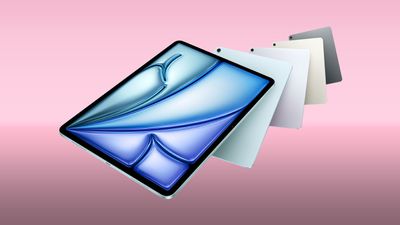
The iPad Air will get a small refresh with a chip update, adopting the M4 chip.
Design and Display
There are no design changes rumored for the iPad Air, so we can expect the same 11-inch and 13-inch size options.
The iPad Air is thicker and heavier than the iPad Pro, and it uses a standard LED display instead of OLED technology. The iPad Air will eventually be upgraded to OLED, but for now, the higher-end display technology will remain limited to the iPad Pro. The iPad Air also doesn’t support ProMotion, and there’s no sign that Apple is planning to add it.
The iPad Air will continue to feature USB-C, a Touch ID top button, and the same front and rear cameras.
It’s possible there will be a new color option, but it’s not guaranteed with a minor refresh. No new accessories are rumored, and it will continue to work with the Magic Keyboard and the Apple Pencil Pro.
M4 Chip
Apple has been updating the iPad Air with an M-series chip that’s a generation behind the chip in the iPad Pro. Since the iPad Pro was updated in October 2025 with the M5, the iPad Air is set to get the M4 chip.
The M3 in the current iPad Air and the M4 chip are both built on a 3-nanometer process, but the M4 has an updated process that brings speed and efficiency improvements.
There are up to 10 CPU cores instead of 8, the Neural Engine is faster, and there’s more memory bandwidth. The GPU is also more power efficient for potential battery gains. The M4 CPU is up to 30 percent faster than the M3 CPU, while the GPU is up to 21 percent faster.
The iPad Air already supports Apple Intelligence, and the next-generation model will continue to do so. Apple increased the RAM in iPad Pro models with higher storage tiers, but there’s no word on whether that same change will come to the iPad Air. Current models feature 8GB RAM, the minimum for Apple Intelligence.
Charging
The iPad Pro gained faster charging with the M5 update, and that’s something that could trickle down to the iPad Air.
N1 Chip
The iPad Air is likely to adopt the N1 networking chip that Apple first introduced in the iPhone 17 models. The N1 chip is an Apple-designed Wi-Fi and Bluetooth chip that offers connectivity and efficiency improvements compared to the third-party chips that Apple has used in previous devices. The N1 supports the latest Wi-Fi 7 and Bluetooth 6 technology.
The current iPad Air offers Wi-Fi 6E support, so the next-generation model could see faster Wi-Fi speeds on compatible networks with Wi-Fi 7.
Apple Modem
Apple used the C1X in the M5 iPad Pro, and the cellular versions of the iPad Air will get that same modem chip. The C1X is an upgraded variant of the C1, Apple’s first in-house modem chip.
It offers performance on par with Qualcomm chips, though 5G connectivity is limited to sub-6GHz with no support for mmWave 5G. That’s not an issue on the iPad, because the current version of the iPad Air doesn’t support mmWave.
Apple’s modem chips are more power efficient than Qualcomm modem chips, and are able to better integrate with other iPad components.
Pricing
There are no rumors of a price increase, so the 11-inch model is expected to continue to start at $599, while the 13-inch model will start at $799.
Low-Cost iPad
Like the iPad Air, the low-cost iPad is going to get a refresh with an updated chip. The update is a bigger deal because the iPad is expected to support Apple Intelligence for the first time.
Design
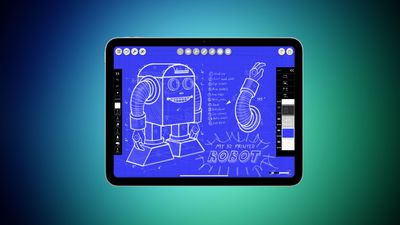
The 12th-generation iPad will have the same 11-inch edge-to-edge display with Touch ID Side Button and thick bezels as the current model.
The low-cost iPad is only available in a single screen size, and it is Apple’s thickest tablet at 7mm. It features a Retina LCD display with no ProMotion support, no P3 wide color, and no lamination (display technology that cuts down on glare, provides a more responsive feel, and allows for a thinner size) compared to Apple’s other tablets.
Apple makes the low-cost iPad in several fun colors, and we could see some new shades in 2026. Current colors include blue, pink, silver, and yellow.
No changes are expected for the rear camera, front camera, USB-C port, or compatibility with accessories like the Apple Pencil.
A-Series Chip
The low-cost iPad will be equipped with Apple’s A18 or A19 chip, both of which are built on a 3-nanometer process. The upgraded chip will offer speed and efficiency improvements over the A16 chip that’s in the current model.
The A16 chip that Apple used in 2025 does not support Apple Intelligence, but the A18 and A19 do, so that will mark a major update for Apple’s affordable tablet. The 2026 model will be able to support Apple Intelligence features that are unavailable with the 2025 model.
The 11th-generation iPad has 6GB RAM, but Apple will need to bump that up to 8GB for Apple Intelligence.
N1 Chip
Apple is expanding its N1 networking chip to many of its new devices. The N1 chip supports Wi-Fi 7, Bluetooth 6, and Thread networking technology for smart home devices.
The 11th-generation iPad is limited to Wi-Fi 6, so if the 12th-generation version gets Wi-Fi 7, it will be able to connect to faster 6GHz networks for the first time. Bluetooth 6 would also be an improvement over Bluetooth 5.3. There is a chance that Apple is reserving the N1 chip for its more premium devices, based on leaked internal code. If that’s the case, the iPad won’t include the N1 chip.
Apple Modem
Apple has designed C1 and C1X modem chips that it has used in iPhones and iPads in 2025, and the next-generation version of the iPad could also get an Apple-designed modem chip for cellular models.
Pricing
The 11th-generation iPad is priced starting at $349 for 128GB of storage, and there are so far no indications that pricing is going to change for the 12th-generation model.
MacBook Pro
Apple already refreshed the entry-level 14-inch MacBook Pro with an M5 chip, but now it’s time for the higher-end 14-inch and 16-inch models to get an update.
Design
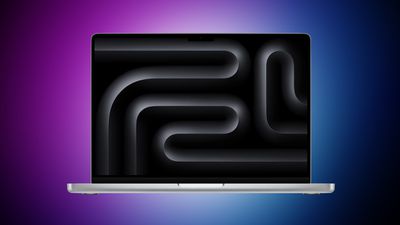
There are no rumors of design changes, and we are expecting the upcoming M5 MacBook Pro models to look just like the M4 versions. Apple will continue to offer 14-inch and 16-inch size options, both of which should come in M5 Pro and M5 Max varieties.
M5 Max and M5 Pro
We already got base model 14-inch MacBook Pro with the new M5 chip in October, so what we’re expecting are upgraded 14-inch and 16-inch models with M5 Pro and M5 Max chips.
The M5 family is built on a more advanced 3-nanometer process from TSMC, and it offers speed and efficiency improvements. The M5 chip is up to 20 percent faster in multi-core CPU performance than the M4 chip, and we could see similar improvements for the M5 Pro and M5 Max chip options. GPU performance is up to 30 percent faster.
With the M5, Apple added a Neural Accelerator to each GPU core, improving the speeds of GPU-based AI workloads. The chip also supports third-generation ray-tracing, second-generation dynamic caching, and enhanced shader cores.
The 16-core Neural Engine is more energy efficient than before, and unified memory bandwidth has improved. These are all features that we’re likely to see with the M5 Pro and M5 Max chips as well.
Why You Shouldn’t Buy an M5 Pro/Max MacBook Pro
If you’re not in serious need of a new MacBook Pro right away, early 2026 is a bad time to upgrade. The next-generation MacBook Pro after the early 2026 models is expected to feature an OLED display and touchscreen capabilities, both of which will mark a major upgrade in display quality. It’s expected to include a Dynamic Island instead of a notch, and macOS will be optimized for touch interactions.
Most people shelling out extra money for a MacBook Pro with a higher-end M5 Pro or M5 Max chip need the extra performance or display quality, so it is worth waiting for the huge update that’s coming.
The transition to OLED will also likely bring a design update along with M6 Pro and M6 Max chip technology, which is another reason to wait.
Of course, the new features could be limited to higher-end MacBook Pro models or could be significantly more expensive. If you’re on a budget, need a Mac now, or don’t care about OLED, the M5 Pro and Max models could still be worth considering.
MacBook Air
Along with the low-cost MacBook and M5 Pro/Max MacBook Pro models, Apple could introduce a refreshed version of the MacBook Air next week.
M5 Chip
The next-generation MacBook Air will adopt the M5 chip, which Apple already introduced in the iPad Pro and MacBook Pro models that came out last year.
Apple’s M5 chip uses third-generation 3-nanometer technology, and it features up to a 10-core CPU and up to a 10-core GPU with 3.5x faster performance than the M4 chip.
The M5’s multithreaded CPU performance is up to 15 percent faster than the M4, and it offers 30 percent faster GPU performance. Apple added a Neural Accelerator to each GPU core to improve the speeds of GPU-based AI workloads. Unified memory bandwidth is 153GB/s, which is close to a 30 percent improvement over the M4’s memory bandwidth. Unified memory architecture lets the chip use a single memory pool for running AI models on device, boosting GPU performance, and improving multithreaded performance in apps, so an upgrade there is meaningful. RAM will continue to start at 16GB, with 24GB and 32GB available as upgrade options.
Third-generation ray-tracing, second-generation dynamic caching, and upgraded shader cores bring improvements to gaming and other system-intensive tasks. An updated 16-core Neural Engine is more energy efficient than before, so we could see battery life improvements.
Storage tiers are likely to stay the same, starting at 256GB with 512GB, 1TB, and 2TB available as upgrade options.
Design
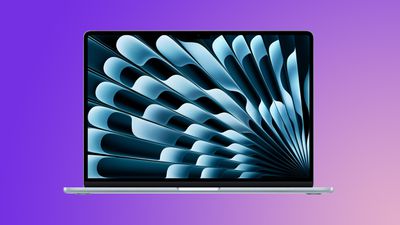
The MacBook Air got a design overhaul in 2022, and there are no signs that Apple is planning for an updated chassis in 2026. Apple often uses the same design for several years before updating, and design refreshes are usually tied to major new features.
We’re expecting Apple to release the same 13-inch and 15-inch size options in 2026. Both will feature the same aluminum unibody design and fanless thermal system, along with a Retina LCD display.
The MacBook Air is likely to continue to offer two Thunderbolt 4/USB-C ports, and the same speaker, microphone, and camera setup.
Pricing
MacBook Air pricing is not expected to change, and it should continue to start at $1,099. There is a possibility that memory upgrades will be more expensive due to DRAM shortages that have driven prices up.
Other Possibilities
Apple’s Special Experience seems like it’s going to focus primarily on lower-end devices, with the exception of the M5 Pro and M5 Max MacBook Pro models. We are waiting on other devices that rumors have suggested will be refreshed in early 2026, but it’s likely we’ll be waiting a bit longer for them.
HomePod mini
A new version of the HomePod mini is apparently ready to go, but Apple may hold it back for a more home-focused refresh that will also include the rumored home hub. The home hub and the HomePod mini are likely tied to the new version of Siri.
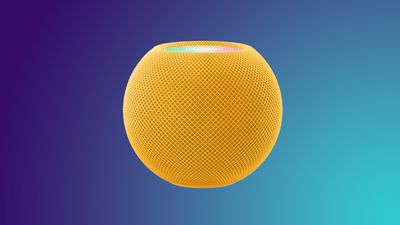
Apple was aiming to introduce the more capable Siri in iOS 26.4, but pushed back Siri’s debut because of ongoing reliability issues. It’s not clear when the new Siri is coming now, and so the timing of the next HomePod mini is also unknown.
The HomePod mini is expected to get a new chip and new colors, but not much else. The design will stay the same.
Apple TV
As with the HomePod mini, the next Apple TV is a device we’ve been hearing rumors about since late last year. It was supposed to come in late 2025 or early 2026, but it too is likely tied to the Siri refresh.
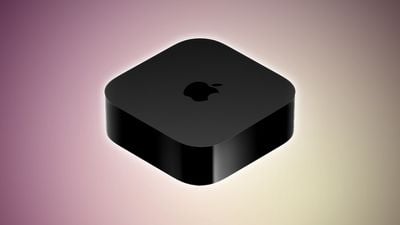
There are no design changes expected for the Apple TV, and it will get an updated chip.
MacRumors Coverage
Apple isn’t holding an event for the new announcements, so there won’t be a video to watch. We’re expecting to see new products unveiled via press release on Monday, Tuesday, and Wednesday, so stay tuned to MacRumors for details on everything Apple unveils.

Apple is holding a Special Experience for members of the media on March 4, 2026, where we’re expecting Apple to show off the new products. MacRumors will be in attendance, so we’ll be able to share a hands-on look at whatever Apple has to offer.
The Special Experience will take place at 9:00 a.m. Eastern Time.