Government to give go-ahead for £1bn defence helicopter deal
Simon Jack,Business editor,
Pippa Rifkaand
Chris Lockyer,Somerset

 BBC
BBC
The government is set to approve a £1bn purchase of military helicopters from the UK’s only specialist factory.
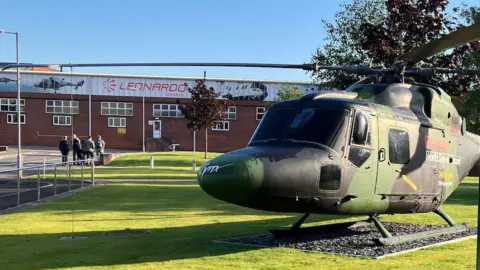
Italian company Leonardo’s plant in Yeovil, Somerset, had been left in limbo after a planned visit by Defence Secretary John Healey to award the contract was cancelled on Thursday.
But Treasury sources have told the BBC the deal to build a fleet of 23 defence helicopters will be signed off on Friday, after all.
Leonardo’s chief executive, Roberto Cingolani, has previously said the factory’s future would be at risk if it was not awarded the contract.
Britain’s last military helicopter manufacturing site employs 3,000 workers and was the only remaining bidder for the contract.
It is understood that the chancellor and prime minister chose to intervene to ensure the project would go ahead, in part to protect UK jobs.
The Chancellor, Rachel Reeves, did not want the deal to collapse on her watch, because security and growth “were fundamentally connected”, a Treasury source said.
The government had previously delayed making a decision on the contract, which was originally due in the autumn. The current tender is due to expire in two days’ time, on 1 March.
John Healey was originally expected to announce the deal on Thursday, but had not been given the final sign-off, leading to last minute jitters over the government’s commitment to the project.
The government has previously said it needed to finalise its defence investment plan before making a decision on the helicopter contract.
The Prime Minister, Sir Keir Starmer, has pledged to increase defence spending over the medium term to meet growing security threats.
The Yeovil factory dates back to 1915 when it built planes for use in World War One under the name Westland.
In the 1950s it produced Merlin and Apache helicipters.
As well as the 3,000 employed on site, a further 9,000 supply chain jobs are supported by the factory.
The Unite trade union, which has campaigned for the contract to be approved, said the news represented a “tremendous victory” for workers in the aerospace sector.
“We are pleased that the Rachel Reeves has now listened to Unite on this issue. However, it took way too long to get this done, and we still have to question why workers were left in the dark until the 11th hour,” said Unite general secretary Sharon Graham.
Unite called on the government to push ahead with publication of its Defence Investment Plan, to clarify the future of other contracts including the replacing of old fighter jets with new Typhoons, fitted with Rolls Royce engines, and a further commitment to military satellites built in Portsmouth and Stevenage.