Order Jamie Glazov’s new book, ‘United in Hate: The Left’s Romance with Tyranny, Terror, and Hamas’: HERE.
In January, President Trump went to Davos for the World Economic Forum, an annual gabfest of international elites and globalists who fancy themselves to be capable of replacing nation states’ cultures, governments, and voting citizens.
Needless to say, they despise Donald Trump’s creed, “Make America Great Again,” which for the Davoisie has already become too great for Europe’s much-battered and humiliated amour propre — a once-great civilization that has depended and continues to depend for its security on the nation populated by peoples the Europeans cast off.
It also was American progeny who rescued them from fascism and Nazis in two bloody World Wars, and then liberated them from Soviet communism — a creed many of them still promote and admire — during the Cold War. And still to this day, America protects them and finances most of the alliance while these ingrates — with the exception of a few Eastern European countries — insult and mock their canaille benefactors.
And piling insult upon injury, President Trump, the epitome of Europe’s idea of déclassé vulgarity and low-class political politesse, and polluted Davos with his adventurism in seeking control of Greenland. As usual, their reading of Trump’s aims and motives come from the Never Trump international media. Treasure Secretary Scott Bessant laid out the truth in a Fox News interview:
“I think the president has a very strong view on Western Hemisphere security and believes that the U.S. should not outsource our national security,” Bessent told FOX Business’s Maria Bartiromo at the World Economic Forum on Tuesday that Trump “believes that Greenland is essential for the Golden Dome missile shield. The president is worried that if there were an incursion into Greenland, the U.S. would be called upon to defend Greenland. Greenland is becoming more and more attractive for foreign conquest,” he continued. “And he very strongly believes that it must be part of the United States to prevent a conflict, rather than getting the U.S. engaged and exposed into a hot conflict.”
Finally, Bessant pointed out,
The world’s largest island has become a strategic prize — one that caught President Donald Trump’s eye long before most Americans were paying attention. A semi-autonomous Danish territory, Greenland is home to a key U.S. military base and has become increasingly important to global security and trade as melting ice opens new shipping lanes and access to natural resources. That shift underscores the serious geopolitical calculation behind Trump’s interest in the island’s location, its military value and the rapidly changing Arctic.
Moreover, Trump’s move, as the Wall Street Journal reminds us, is a function of the feckless Europeans who until Trump pressured them, stinted their NATO obligation to spend 5% of GDP on military preparedness and materiel, and instead spent it on social welfare expenditures, a large share of which goes to immigrants, including jihadists.
“Yet how embarrassing for Europe,” in particular, the Journal continues. “Mr. Trump pointed out that Denmark and other European allies would struggle to defend Greenland from the U.S. or anyone else. ‘It’s the United States alone that can protect this giant mass of land, this giant piece of ice, develop it and improve it,’ he said. Which is true.”
This followed Trump’s long riff about Europe’s many economic dysfunctions, especially on energy policy. He referred to the European Union’s flagship Green New Deal climate policies as the “green new scam,” chastised Britain for failing to tap more North Sea oil, and mocked the “catastrophic energy collapse which befell every European nation” in recent years. “Also all true,” the Journal reports.
Trump’s performance at Davos was a masterpiece of statecraft that features his trademark strengths, particularly his ability to recognize and exploit his opponents’ weaknesses like arrogance and self-regard. But Trump’s skills fall short, at least for now, when dealing with Iran and traditionally orthodox jihadists.
This misreading by Westerners of Islam reflects the dominance of secularism and its effects even on Christians. In most of the West, religion has lost its power in our government and laws, culture and schools, and instead occupies a space that Pope Benedict XVI defined as the “expression of a consciousness that would like to see God eradicated once and for all from the public life of humanity and shut up in the subjective sphere of cultural residues from the past.”
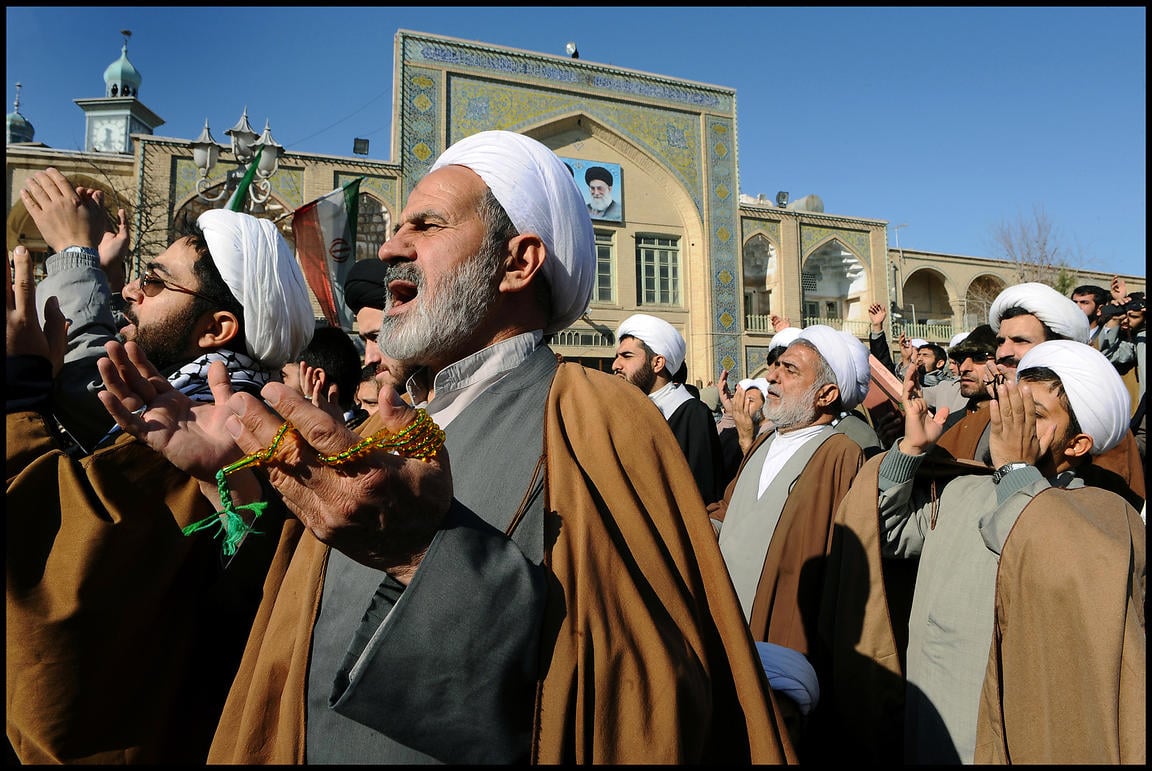
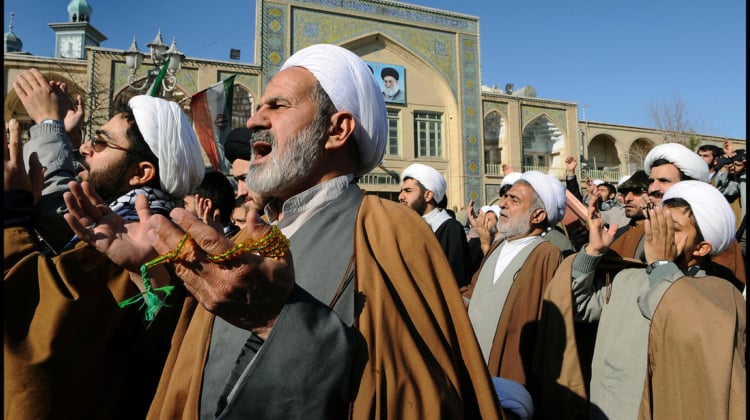
On the other hand, the religiosity of Muslims is expressed to the world frequently by religious violence against infidels in fulfillment of the precepts of Allah. Moreover, unlike Islam, Christianity in our age is a collection of comforting holiday rituals and a source of therapeutic solace, and is banned from public roles in government and politics. In contrast, as Middle East historian Bernard Lewis writes,
in most Islamic countries, religion remains a major political factor, for most Muslim countries are still profoundly Muslim, in a way and in a sense that most Christian countries are no longer Christian. . . in no Christian country at the present time can religious leaders count on the degree of belief and participation that remains normal in the Muslim lands. . . Christian clergy do not exercise or even claim the kind of public authority that is still normal and accepted in most Muslim countries.
Islam’s deep hold on most of its 1.6 billion adherents, and their fealty to the Koran’s holy war imperative are powerful weapons, as was its success in dominating the West before the rise of modernity. For all the spiritual costs of the West’s secularism, it led to technological dominance in the world, which overshadows Islam’s martial fervor. Donald Trump’s intervention in Hamas’s slaughter of Israelis, and his degradation of Iran’s nuclear weapon site, are examples of both the West’s technological power and its humanitarian nature.
Yet Trump has made threats and ultimatums to Iran’s clerical regime that seemingly don’t “get” Islam’s powerful cult of martyrdom, epitomized in the words announced to enemies over battle: “We love death as you love life.” This motto drains threats of their utility, and accounts for much of Muslims’ 1000 years of success in battle.
For example, the Economist observed of Jimmy Carter’s attempt to negotiate with Iran the release of the kidnapped American embassy staff by threatening to freeze Iran’s assets: “The denial of material things is unlikely to have much effect on minds suffused with immaterial things.” Indeed, the students who attacked the embassy did so to demonstrate that “Allah is the ultimate power.”
Yet two weeks before the Davos meeting in which Trump read his opponents like a book, The Gatestone Institute’s Robert Wilson quoted Trump’s threat in his January 2 post on Truth Social about five days into the Iranian protests: “If Iran shoots and violently kills peaceful protesters, which is their custom, the United States of America will come to their rescue. We are locked and loaded and ready to go.”
Indeed, the executions stopped, but as the New York Post reported, “The ruthless slaughter of anti-government protesters in Iran appears to have stopped — but only because residents are being held hostage in their homes by machine gun-wielding security forces that have flooded the streets, sources told the Post Thursday.”
Here we see another traditional tactic of Islam: the pretense of responding to the infidels’ demands or agreements, in order to gain time in order to prepare for the renewal of the fight. In this they honor Mohammed’s dictum that “war is deception.”
President Trump is a master of the tactical feint and misdirection, so perhaps his threats will ultimately be fulfilled. On January 23 he announced that he has sent an armada to Iran, as well as the USS Abraham Lincoln guided missile destroyer. According to Yahoo News, “The president believes there may still be negotiations between the United States and Iran”: no doubt music to the mullahs’ ears.
Let’s hope that Trump will not join the Obama “vanishing red line” club.
In order to eliminate spam comments that have historically flooded our comments section, comments containing certain keywords will be held in a moderation queue. All comments by legitimate commenters will be manually approved by a member of our team. If your comment is “Awaiting Moderation,” please give us up to 24 hours to manually approve your comment. Please do not re-post the same comment.