Today is Pentecost – a special day in the Christian calendar that many Christians may have heard of, but do not always fully understand. Yet Pentecost is incredibly important, because it is deeply connected to the work of the Holy Spirit and the birth of the church.
So, what exactly happened on that day? And why does Pentecost still matter for us as Christians today?
Meaning
Pentecost originates from the Greek word meaning “fiftieth.” It took place fifty days after Passover and comes from the Old Testament Feast of Weeks, also known as the Feast of Harvest (Leviticus 23:15-16; Acts 2:1; Exodus 23:16; Deuteronomy 16:9-10). This was one of the three major Jewish feasts, alongside Passover and the Feast of Tabernacles (Deuteronomy 16:16; Exodus 23:14-17).
In the Old Testament, the Feast of Weeks was a day of thanksgiving. The people offered the first fruits of the harvest to God, thanking Him for the wind, rain, grain and provision He had given (Leviticus 23:17-20; Deuteronomy 26:1-3).
But in the New Testament, Pentecost takes on an even deeper meaning. For Christians, the true first fruit is Jesus Christ. Apostle Paul says, “Christ has indeed been raised from the dead, the first fruits of those who have fallen asleep” (1 Corinthians 15:20). Jesus rose from the dead as the first fruit of new life. Then, on the day of Pentecost, the first community of believers became like the first harvest offered to God (Acts 2:41-47; James 1:18).
What exactly happened on the day of Pentecost?
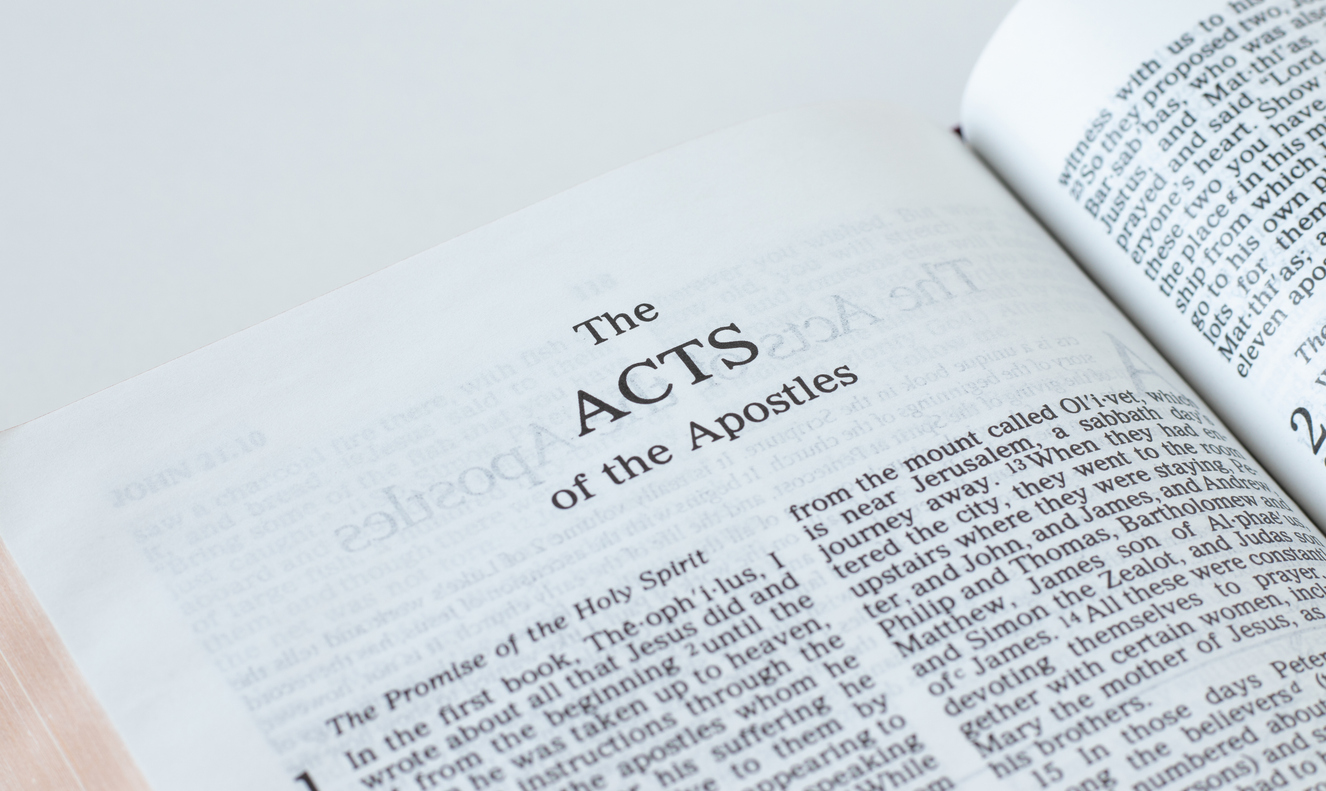
The events of Pentecost are recorded in Acts 2. The believers were gathered together in one place, waiting as Jesus had commanded them (Acts 2:1).
Before His ascension, Jesus told His disciples not to leave Jerusalem but to wait for the gift the Father had promised. He said, “John baptised with water, but in a few days you will be baptised with the Holy Spirit” (Acts 1:4-5; Luke 24:49).
At the same time, Jerusalem was filled with people from many different nations because of the Pentecost celebration. So, many Jews and God-fearing people travelled long distances by foot to gather in Jerusalem to worship and give thanks to God for the harvest (Acts 2:5). That is why people from places such as Parthia, Media, Egypt, Rome and Arabia are mentioned (Acts 2:9-11).
Then suddenly, something amazing happened. There was “a sound like a violent wind from heaven,” filling “the whole house where they were sitting” (Acts 2:2). Then “what seemed like tongues of fire came to rest on each of them” (Acts 2:3). They were filled with the Holy Spirit and suddenly began speaking in different languages through the power and guidance of the Spirit (Acts 2:4).
This was not a small, private experience. It was something seen and heard by others. People from many nations had gathered in Jerusalem for the feast, and they were astonished because each person heard the disciples “declaring the wonders of God” in their own language (Acts 2:6-8; Acts 2:11).
Some people were amazed and asked, “What does this mean?” (Acts 2:12). Others mocked them and said they had drunk too much wine (Acts 2:13). But Apostle Peter stood up and boldly preached the gospel (Acts 2:14-15). He proclaimed that Jesus had been crucified, raised from the dead, and made both Lord and Messiah (Acts 2:22-24; Acts 2:36). That day, about 3,000 people believed and were baptised (Acts 2:41).
Pentecost fulfilled God’s promise
Pentecost was not random. It was the fulfilment of Jesus’ promise and the prophecy of Joel (Luke 24:49; Acts 1:4).
Through Joel, God had promised that He would pour out His Spirit on all people – sons and daughters, young and old, men and women, servants and all who call on the name of the Lord (Joel 2:28-32; Acts 2:16-21).
In the Old Testament, the Holy Spirit often came upon particular people for particular purposes (Judges 6:34; 1 Samuel 16:13; Isaiah 61:1). From Malachi until John the Baptist, there was also a span of around 400 years without prophets or fresh revelation from God – often called the “400 Silent Years” (Malachi 4:5-6; Luke 1:11-17).
But at Pentecost, a new era began. The Holy Spirit was poured out on all believers (Acts 2:17-18; Acts 2:38-39). This means that every Christian can receive the Holy Spirit. He is not given only to a few special people. He is the gift of God to all who believe in Jesus Christ (John 7:37-39; Ephesians 1:13-14).
Pentecost brought unity
Pentecost also shows us the uniting power of the Holy Spirit.
In Genesis 11, at the Tower of Babel, human pride led to division. People wanted to exalt themselves, and God confused their languages (Genesis 11:4-9). But in Acts 2, we see a beautiful reversal. People from different nations and languages heard the wonders of God in their own tongues (Acts 2:6-11). Everyone could understand one another, and through the Holy Spirit, people who were once divided were brought together as one (Ephesians 2:14-16; Galatians 3:28).
What makes this even more amazing is that God worked through ordinary Galileans – simple fishermen and common people who were not respected or admired by society (Acts 2:7; 1 Corinthians 1:27-28). They were not powerful, wealthy or highly educated. Yet God revealed His power through them and used them to proclaim His message to the nations (1 Corinthians 1:27-29; Acts 4:13).
The Holy Spirit brings people together. He breaks down barriers of language, culture, class and background (Galatians 3:28; Colossians 3:11). He forms one people in Christ (1 Corinthians 12:12-13; Ephesians 4:3-4). That is why the church is not simply a human organisation. The church is the community of the Holy Spirit and the body of Christ (1 Corinthians 12:27; Ephesians 1:22-23).
The Holy Spirit changes us from within
The Holy Spirit is a gift. Just as salvation is given by grace through Jesus Christ, the Holy Spirit is also given by grace (Ephesians 2:8-9; Acts 2:38). Jesus said that the Father gives the Holy Spirit to those who ask Him (Luke 11:13). Apostle Peter also said in Acts 2:38, “Repent and be baptised… and you will receive the gift of the Holy Spirit.”
The Holy Spirit does what we cannot do by our own strength (Zechariah 4:6; John 15:5). Water can wash the outside, but the Holy Spirit cleanses the heart, which is where the fundamental problem of sin lies (Ezekiel 36:25-26; Psalm 51:10). And sin closes our hearts to God, but the Holy Spirit opens our hearts to know and love Him (Acts 16:14; Romans 5:5).
Through the blood of Christ, the Holy Spirit makes us spiritually alive and transforms us into new creations. (Titus 3:5-6; 2 Corinthians 5:17) We are reborn through Him – dying to our old sinful life and beginning a new life in Christ (Romans 6:4-6; John 3:5-6).
As the Spirit of truth, He continually teaches and reveals to us the truth of God’s love in a broken and sinful world (John 16:13; 1 Corinthians 2:10-12). He convicts us of sin, comforts us in weakness, strengthens our faith, and gently guides us like a loving teacher and parent (John 14:16-17; Romans 8:26; Galatians 5:18; Isaiah 63:14).
Through faith in Christ, we are also given the right to become children of God, and the Holy Spirit confirms this within us (John 1:12; Romans 8:15-16). As God’s children, we are continually nurtured, corrected, protected and led by Him as He prepares us for heaven (Hebrews 12:6-7; Romans 8:14; Philippians 1:6).
He also sanctifies us. Like fire refining gold, He purifies us day by day so that we may become more like Christ (1 Thessalonians 5:23; 1 Peter 1:6-7; 2 Corinthians 3:18).
Pentecost was the birth of the church and the beginning of mission
Pentecost is also the day the church was born.
After Peter’s sermon, thousands believed (Acts 2:41). Acts 2 later describes how the believers devoted themselves to the apostles’ teaching, fellowship, breaking of bread and prayer (Acts 2:42). They shared generously, worshipped together, praised God, and the Lord added to their number daily (Acts 2:44-47).
This is what the church is meant to be: a Spirit-filled community centred on Christ, growing in love, worship, generosity and mission (Ephesians 2:22; Colossians 3:16; Acts 2:42-47).
Pentecost is deeply connected to harvest. Jesus is the first fruit, and believers are called to become fruitful witnesses (1 Corinthians 15:20; John 15:16). The 120 believers who had been gathered were transformed by the Holy Spirit, and through Peter’s preaching, 3,000 more were brought to faith (Acts 1:15; Acts 2:4; Acts 2:41)
This is one of the beautiful changes we see after the Holy Spirit came. Peter, who had once denied Jesus out of fear, now stood before the crowd with courage and boldly proclaimed the gospel (Matthew 26:69-75; Acts 2:14; Acts 4:13). The same disciples who had once been hiding in fear became faithful witnesses of Christ through the power of the Holy Spirit (John 20:19; Acts 1:8; Acts 4:31).
This shows us that Pentecost is not only about receiving the Holy Spirit for ourselves. It is also about being sent out. The Holy Spirit empowers us to witness, evangelise and take part in the Great Commission (Acts 1:8; Matthew 28:19-20).
The gospel began to move beyond one room, one city and one people. Through the Holy Spirit, world mission was opened, and the church began spreading to the ends of the earth (Acts 1:8; Acts 8:4; Romans 10:18).
Final thoughts
Dear reader, Pentecost reminds us that God has not left us alone.
If you are in Christ, the Holy Spirit now dwells within you. You are now a temple of God. The same miraculous change the disciples and early believers experienced is available to you today through the Holy Spirit.
The fearful became bold. The weak became strong. The broken were restored. Ordinary people became faithful witnesses of Christ. And the same Holy Spirit who worked in Acts 2 is still working today.
He leads us toward heaven, sanctifies us as holy people, seals us as citizens of God’s kingdom, and empowers us to live for Christ in a dark and difficult world. He teaches us the truth, comforts us in suffering, convicts us when we stray, and reminds us daily of God’s love.
So, today, as we remember Pentecost, let us give thanks for the grace of the Holy Spirit and seek to depend on Him daily. The church began through the power of the Holy Spirit, and even today, we are called to live by His power. May we move forward with faith and boldness, trusting that He is still at work in us and through us each day.